
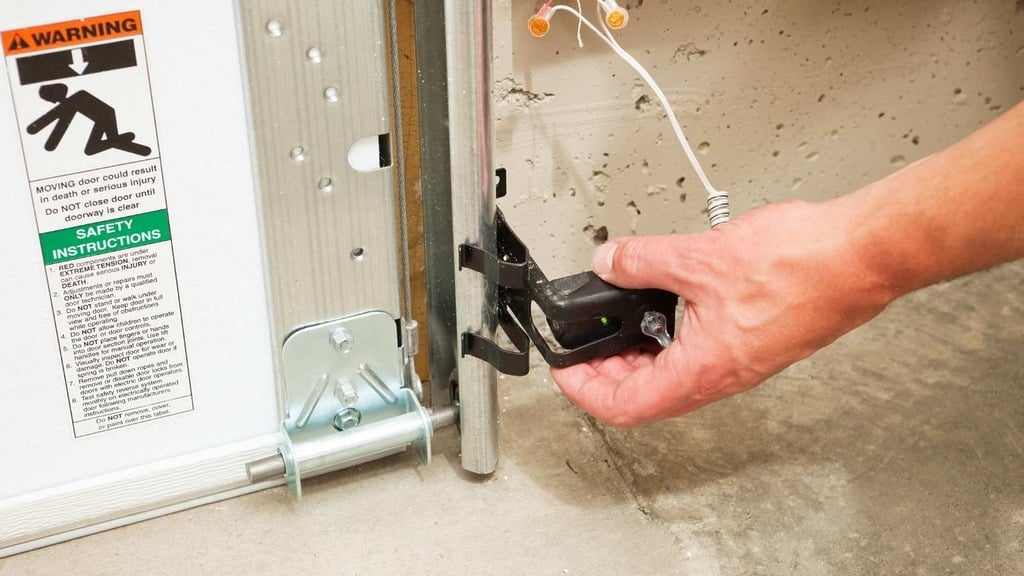
Garage door sensors are a key part of any garage door system, serving a purpose that goes far beyond convenience. They function as a critical safety feature that protects your family, pets, and property from the heavy force of a closing door, which is why every modern electric garage door opener includes them, and why countless accidents are prevented because they are in place.
Understanding how these sensors work and recognizing the signs of trouble matters for every homeowner, since the safety of the entire opener depends on them working correctly. When garage door sensors start to fail, the protection they provide weakens along with the reliability of the whole system, which is why problems should be addressed quickly through a qualified garage door service so your garage door remains safe and dependable.
How Garage Door Safety Sensors Work Today
Modern garage door safety sensors rely on infrared technology, creating an invisible beam that works like a tripwire across the base of the doorway. When the system is operating normally, the photo eye sends a steady signal to the garage door opener, which allows the door to close only when that beam remains uninterrupted, giving the opener the confirmation it needs to run safely.
Because the sensors are tied directly to the opener’s safety logic, their performance affects how reliably the entire system behaves while the door is moving. When the beam is stable and the sensors communicate clearly, the door responds as expected during closing, whereas any disruption in that communication can prevent the door from finishing its cycle.
If you’d like a clearer, step-by-step look at what’s happening behind the scenes and why these sensors matter so much for everyday safety, check out our related guide, “How Does a Garage Door Sensor Work and Why Is It So Important?”
How a Garage Safety Sensor Detects Motion and Objects Near the Door
Using infrared light, a garage safety sensor projects an unseen beam across the lower opening of the garage, positioned to detect movement or objects near the door’s path. If something passes through that line, whether it is a vehicle, a person, or an item left too close to the threshold, the sensor immediately signals the opener, which reacts by stopping the closing motion or reversing to avoid contact.
This continuous detection is central to how garage doors meet safety requirements, since the opener is designed to treat any broken beam as a hazard. By coordinating the sensor’s input with the door’s movement, the system stays responsive to obstructions in real time, reducing the chance of impact during operation.
What Happens Inside Garage Door Sensors During Closing
As the garage door begins to close, one sensor acts as the sender, emitting an infrared beam toward the opposite side, while the other works as the receiver, tuned to detect that beam without interruption. When the receiver detects a clean, steady signal, the opener interprets this as a safe condition and continues lowering the door until it reaches the fully closed position.
Indicator lights on the sensor units show whether that beam is being sent and received correctly, with steady lights typically reflecting proper alignment and communication. If the beam is interrupted mid-close, the receiver registers the loss instantly. The change in signal prompts the opener’s logic board to stop the motor and reverse the door, a safety response that happens automatically to prevent the door from closing onto something in its path, even while other issues, like broken garage door spring replacement, may be affecting overall door operation.
Main Types of Garage Door Sensors
Different types of garage door sensors play a crucial role in how a garage door system operates, since the door relies on them to confirm that closing is safe and conditions are normal. In most setups, you will encounter two primary categories: photoelectric sensors that use an infrared beam as an invisible tripwire, and mechanical-style sensors that respond when the door meets resistance or pressure while moving downward.
Knowing which type of garage door sensors your system uses helps you understand how your door decides whether to continue closing or stop, which matters because each sensor type protects the door in a different way. When homeowners recognize the kind installed on their door, they are better equipped to interpret what the system is doing during operation, especially when closing issues begin to appear.
For a deeper explanation of what those sensors are actually “watching” and why they respond the moment something crosses their path, you can also read our related post, “Garage Door Sensors and Why They React to Movement and Obstacles.”
Photoelectric Garage Door Safety Sensor Systems (Beam-Based)
Photoelectric garage door safety sensor systems work through an infrared beam that stretches across the lower opening of the garage, forming a line the door must “see” before it can close fully. When that beam stays unbroken, the garage door opener receives confirmation that the path is clear, whereas any interruption signals a possible obstruction and stops the door from continuing its downward movement.
Because this beam-based setup is designed specifically to detect objects or movement in the door’s path, it serves as one of the main protections against the door closing on something underneath it. When the sensors cannot maintain a clear connection, the opener treats the situation as unsafe, which is why beam disruptions often show up as doors that hesitate, reverse, or refuse to close.
Magnetic Contact Garage Door Remote Sensor Features and Use Cases
A magnetic contact garage door remote sensor works differently from beam-based sensors because its job is to monitor door position rather than detect obstructions. Instead of creating a tripwire across the opening, it uses two matched components: a magnet and a switch, placed on the door and the frame, so the system can tell whether the door is fully closed or currently open.
When the door shuts, the magnet aligns with the switch to complete a circuit, and when the door moves away, that circuit breaks and reports an open state, which is why these sensors are commonly tied to security or monitoring systems rather than the opener’s safety reversal function in both residential setups and commercial overhead doors. In simple terms, photoelectric sensors focus on preventing unsafe closing by watching the doorway, while magnetic contact sensors focus on confirming the door’s status by tracking its position.

Warning Signs of Garage Door Sensor Trouble
Flashing indicator lights on a garage door are often the first hint that the sensor system isn’t working the way it should, especially when the photo eyes are no longer lined up correctly. When that alignment slips, the infrared beam can’t travel cleanly between the sensors, so the door may hesitate or refuse to close, which creates a safety concern if the system can’t reliably detect what’s in its path.
Other issues can show up just as clearly when something along the door’s track interferes with the beam, such as stored items or everyday clutter that sits too close to the sensors. Once the beam is disrupted, the opener interprets it as a hazard and responds accordingly, which is why even small changes near the doorway can cause sensor malfunctions that prevent normal closing.
If you’re noticing repeated sensor interruptions and want to understand how local safety rules shape what your system is supposed to do, take a look at our companion article, “Garage Door Sensors Near Me: Understanding Safety Standards in Your Area.”
How Garage Door Sensors Misalignment Disrupts Proper Closing
Misalignment causes problems because garage door sensors depend on a precise line of sight to confirm that the doorway is safe for closing. When the sensors shift out of position, they may fail to detect the infrared beam that signals a clear path, so the opener cannot get the confirmation it needs to finish the closing cycle.
Blinking indicator lights usually accompany this condition, reflecting that the sensors are not seeing each other properly, and without that connection, the door loses an essential layer of protection. As a result, the system may stop mid-close or reverse unexpectedly, since it defaults to safety whenever alignment is uncertain, and the beam can’t be verified, sending that command straight to the garage door motors.
Common Clues a Garage Door Remote Sensor Isn’t Communicating Correctly
In some cases, a garage door remote sensor can stop communicating correctly even when it appears aligned, because the problem may be tied to internal failure or electrical disruption rather than the beam itself. When this happens, the opener may behave inconsistently, closing normally at times but refusing to respond at others, which makes the issue feel intermittent even though the underlying fault remains.
A common sign is pressing the remote, wall control, or garage door clickers and seeing no movement despite sensor lights looking normal, suggesting the opener isn’t receiving a dependable “safe to close” signal. In more severe cases, the door may stop while descending without reversing, or fail to react when the beam is interrupted, which points to a breakdown in how signals travel from the sensors to the opener. When communication weakens this way, the safety function becomes unreliable, and the door’s ability to protect against contact is reduced along with overall system dependability.
Garage Door Sensors Issues That Stop a Door From Closing
Garage door sensors can fail for several reasons that interfere with the door’s ability to close, since the opener depends on clear sensor feedback before it allows the cycle to finish. When a safety sensor photo eye slips out of alignment, the infrared beam can’t complete its path, so the system assumes something is in the way and prevents closing, which can leave the door stuck open and reduce the protection the sensors are meant to provide.
Sensor performance can also drop when lenses are obscured by dirt, debris, or moisture, because even a partial blockage can weaken the beam enough to trigger a safety stop. Since these sensors are tied directly to the door’s closing logic, any disruption in their line of sight can affect how the entire garage door system responds during operation, whether the setup is new from a recent garage door installation or part of an older system.
Physical Blockages and Interference Affecting a Garage Door Safety Sensor
Physical obstructions near the doorway can interrupt the sensor beam, which causes the safety system to treat the area as unsafe even when the blockage is small. Items such as leaves, loose objects, or stored clutter close to the sensor’s path can break the invisible tripwire, so the door pauses or reverses instead of continuing downward.
The same effect happens when the buildup on the photo eye reduces its ability to see the beam clearly, because the sensor can no longer confirm a clear path, and the opener defaults to stopping as a safety response. When the beam is disrupted by either a nearby object or reduced visibility, the safety sensor prevents full closure to avoid contact, aligning with the obstruction-protection intent outlined by ICC Safe.
Power, Circuit, or Wiring Problems Linked to Garage Door Sensor Replacement
Garage door sensors rely on a steady low-voltage connection to the electric garage door opener, so when the power supply or wiring is compromised, the sensors may fail to operate as intended, and the door may refuse to close. Damage to the wiring is a common cause, since moisture, pests, or accidental impact can fray, pinch, or break the lines that feed power and carry signals between the opener and each sensor, which lowers voltage and leads to flickering lights, intermittent performance, or sensors that stay dark even when the issue isn’t obvious at first glance. Because both the wiring and the sensors wear down over time from daily use and exposure to temperature swings and humidity inside the garage, a point can come when the internal circuit no longer functions or the wiring is too deteriorated to support reliable communication, making garage door sensor replacement the most dependable way to restore safety and proper operation.
Knowing what can prevent a garage door from closing properly is essential for keeping the system safe and dependable, especially when sensor-related issues are involved. Problems often stem from misalignment or obstructions that interrupt the sensor’s signal, which is why paying attention to warning signs matters before they create a larger safety risk. By staying aware of how your garage door sensors behave and understanding the type of sensors your system uses, you can recognize trouble sooner and reduce the chance of repeated closing failures. When sensor problems continue despite normal operation elsewhere in the system, professional assistance may be necessary to restore reliable performance and protect the safety features your garage door depends on.
When that kind of help is needed, DoorJam Garage is the team homeowners trust for clear answers and dependable service, especially when sensor issues keep a door from closing the way it should. If your garage door is acting up and you want it handled right the first time, contact us today or give us a call and get your door back to safe, reliable operation.
Frequently Asked Questions
Why won’t my garage door close even when the garage door sensors don’t detect anything blocking it?
When a garage door refuses to close despite a clear doorway, the issue often traces back to the sensor system rather than a visible obstruction. Sensors may be slightly out of alignment, or their photo eyes may be unable to “see” each other clearly, and even subtle lens contamination can weaken the infrared beam enough for the opener to interpret the path as unsafe. In some situations, the fault sits deeper in the wiring or the opener’s control circuitry, and because the safety system is designed to default to stopping whenever a signal seems unreliable, the door stays open to prevent accidental contact.
Do universal garage door sensors work the same way with every opener system?
Universal garage door sensors are built around the same basic safety concept, but they aren’t guaranteed to operate identically across every opener platform. Some opener systems are designed around specific wiring layouts or signal expectations, which can limit how well a universal sensor communicates, even if it fits physically. Compatibility, therefore, depends on whether the sensor can match the opener’s safety logic and connection standards, which is why universal options vary in how seamlessly they work from one system to another.
What are the clearest signs that a garage door safety sensor has failed?
Clear sensor failure usually shows up through visible or behavioral cues that point to a breakdown in safety confirmation. Blinking or unresponsive indicator lights often signal that the sensors are no longer maintaining a stable beam, while doors that reverse without an obvious trigger suggest the opener is receiving a fault signal mid-cycle. More serious concerns appear when the door does not respond correctly to beam interruption, and physical damage such as cracked lenses, loose mounts, or deteriorated wiring reinforces that the sensor can no longer perform its protective role.
What types of garage door safety sensors are available for modern doors?
Modern garage doors most commonly rely on photoelectric safety sensors, which use infrared beams across the doorway to confirm that the closing path is clear. Another type seen in many setups is the magnetic contact sensor, which does not govern reversal safety but instead reports whether the door is open or closed for monitoring purposes. Both fall under the umbrella of garage door sensors, yet they serve different functions within the overall system.
What causes garage door sensors to misalign and affect closing?
Misalignment happens because the sensors sit low near the floor, where vibration and accidental contact are more likely to shift their position over time, which makes their line of sight easy to disturb during everyday garage use. As the mounting brackets loosen from repeated door movement or the sensor housings get nudged out of place, the infrared beam can no longer connect cleanly, so the opener interprets the break as an obstruction and blocks the closing cycle, following the same beam-break safety logic described by Wikipedia.
Why are garage door remote sensor lights blinking or unresponsive?
Blinking or inactive sensor lights usually reflect a disruption in how the sensors communicate with each other and with the opener. A blinking pattern often indicates that the beam is not being received steadily, whether from misalignment or an interrupted line of sight, while lights that go dark can point to a power or connection problem that prevents the sensor from operating at all. In either case, the opener reads the lighting behavior as a sign that the safety circuit is not confirming a clear closing path.
What causes a garage safety sensor to stop detecting obstructions?
A garage safety sensor may stop detecting obstructions when its infrared system can no longer interpret signal changes accurately. This can occur through internal electronic failure, electrical shorting, or degraded components that prevent the sensor from processing beam interruption as intended, and heavy lens contamination can also distort what the sensor “sees.” When obstruction detection weakens or disappears, it indicates a functional breakdown in the safety circuit rather than a routine alignment issue.
Could wiring issues affect the garage door sensor replacement needs?
Wiring problems are a frequent driver of sensor failure because sensors depend on stable, low-voltage power and clean signal travel to the opener. When wires fray, pinch, corrode, or lose continuity, the voltage can drop, or signals can become inconsistent, producing intermittent sensor behavior that undermines safe closing. If wiring damage is extensive or long-term signal instability has affected sensor performance, replacement often becomes necessary to restore reliable safety communication.
How long do garage door sensors last before failures become common?
Garage door sensors are designed for long service life, but failures tend to become more common as the components age, especially in environments with moisture, dust, or frequent vibration. After many years of operation, internal circuits and connections may degrade enough to produce unstable signals, which is when doors begin showing sensor-related closing issues. Longevity varies by usage and conditions, yet age-related wear is a typical factor behind later-stage failures.
When should I look for garage door sensors near me due to repeated closing issues?
Repeated closing problems that persist over time usually indicate that the sensor system or its supporting connections are no longer working consistently. When the door routinely stops, reverses, or refuses to close without a clear and temporary cause, it suggests a deeper sensor fault that affects safety reliability. In those situations, seeking service for garage door sensors near you becomes the practical next step, since the issue is no longer isolated to a one-off interruption but to ongoing sensor performance.