
Your garage door is often the largest moving feature in your home, which is why safe operation matters every time it goes up or down. A modern opener adds real convenience to daily routines, but convenience only works when safety is doing its job in the background. That safety depends heavily on the sensors built into the system, since they act as the door’s primary safeguard while it moves.
Though small and easy to overlook, these sensors handle a serious responsibility, because they help keep an automatic garage door operating smoothly and securely day after day. Understanding how they work gives you a clearer sense of whether the entire system is functioning as it should, which can also help you recognize when a garage door service may be needed to restore safe performance. With that awareness in place, you reduce the risk of accidents and gain peace of mind whenever you press the remote.
Why Garage Door Sensors Matter for Everyday Safety
A garage door safety sensor exists for one central reason: to prevent an automatic door from closing when someone or something is in its path. It does this by creating an invisible detection zone across the opening, which reduces the risk of injury and property damage while the door is moving. That protection matters most in real-life moments, especially in households with children or pets who can wander into the doorway without noticing the danger, because a closing garage door doesn’t pause on its own unless the system tells it to.
Safety sensors also became a standard for a reason, since federal regulations in the United States have required them on electric automatic garage door openers since 1993. Before that rule, a descending door could apply enough force to cause serious harm, which made sensor-based reversal a necessary safeguard rather than a nice extra. When sensors are present and functioning, the opener can meet those safety expectations while doing what it was designed to do, whereas removing or bypassing them strips the system of its most important protective layer and raises the risk for everyone using the garage.
If you’d like to go deeper into the mechanics behind that protection, take a look at our related post, “Garage Door Sensors and Why They React to Movement and Obstacles.”
What a Garage Door Safety Sensor Is Designed to Do
A garage door safety sensor constantly monitors the area beneath a closing door, so the system can react the instant something enters that space. Instead of allowing the door to continue downward, the sensor triggers a stop and reversal, turning an automatic garage door from a convenience feature into a safety feature as well. In practice, it means the door responds to its environment rather than moving blindly, because it is designed to treat any interruption as a potential hazard.
This protection comes from an invisible beam that runs near the floor, positioned low enough to detect small children, pets, or items that sit close to the ground. When that beam is interrupted during a closing cycle, a signal is sent immediately to the opener, prompting it to halt the door and reverse direction. That rapid response is exactly what prevents accidents in the moment, since the door stops before contact can happen and rises back up once the system recognizes an obstruction.
The Core Parts of a Garage Safety Sensor System
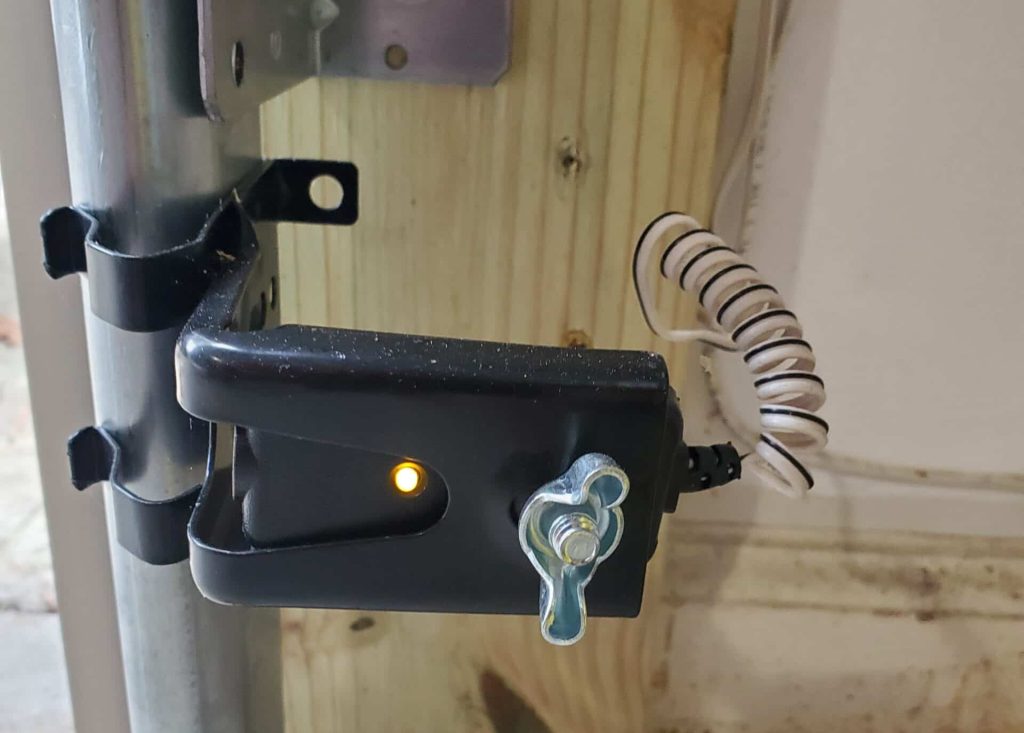
Understanding how garage door sensors work starts with knowing what the system includes and how each part contributes to safety. Most setups use two compact sensor units mounted on opposite sides of the door track near the floor, with one unit sending a signal and the other receiving it. Together, they maintain an infrared beam across the opening, which acts as the door’s detection line while it moves.
Inside each sensor is a photo eye, a small lens that handles the beam’s delivery or detection depending on the unit’s role. The sending unit projects an invisible infrared signal toward the receiving unit, and the door operates normally as long as that signal remains uninterrupted, which is why sensor problems can sometimes look like bigger mechanical issues, such as the need for broken garage door spring replacement. Many systems also include indicator lights that confirm power and beam detection, offering a simple visual cue that the two units are communicating as intended, since stable lights usually reflect normal operation while blinking lights suggest the beam is not being detected.

How Garage Door Sensors Respond When They Detect Something
Garage door sensors react instantly and automatically whenever something enters the door’s path, which is exactly how they reduce the risk of injury and damage. A low infrared beam runs across the bottom of the opening like an invisible tripwire, so the moment it’s interrupted, the receiving sensor recognizes that change. Whether the obstruction is a person, a pet, or an object on the floor, the system responds the same way, because it’s designed to treat every interruption as a safety event.
Once the sensors detect a break in the beam, they send an immediate signal to the opener’s motor control, which stops the door from continuing downward. The opener then reverses direction and returns the door to the open position, not as a special setting but as a built-in safety behavior. This response is a standard part of modern garage door systems, since it protects people and property every time the door operates, even when the obstruction appears unexpectedly.
For a closer look at what happens when that safety response misfires, read our companion article, “Garage Door Sensors Issues That Keep Doors From Closing Properly.”
Infrared Technology Inside Garage Door Sensors
The technology behind garage door sensors is straightforward but highly effective, since it relies on an infrared beam that can’t be seen with the naked eye. One sensor unit sends out this beam across the doorway, and the other unit receives it on the opposite side, forming a continuous line that confirms the opening is clear. As long as that beam reaches the receiving photo eye without interruption, the system understands that the door can close safely when activated.
The moment something crosses that beam, the light no longer reaches the receiver, which is how the system recognizes an obstruction. The sensors register the loss of signal immediately, and that single change is enough to trigger the opener to stop and reverse, because the beam is treated as the door’s safety boundary. In that way, a simple infrared link between two small units becomes a dependable safeguard, since it keeps the door from closing into anything in its path.
How a Garage Door Remote Sensor Communicates With the Opener
For the safety feature to work, the sensors and the opener have to stay in constant communication, which they do through low-voltage wiring connected to the opener’s control system. The sending and receiving units don’t make decisions on their own; instead, they continuously report whether the infrared beam is intact, allowing the opener to determine if a closing cycle is safe. When the receiver detects a steady beam, it relays a clear-path signal, which allows the door to close under normal operation.
If the beam is interrupted, the clear signal stops immediately, and the opener’s logic interprets the loss as a warning, whether the system is on a residential setup or on commercial overhead doors. Power to the closing function is cut, and the reversal sequence begins immediately, because the system is built to prioritize safety over motion. This simple, always-on exchange between the remote sensor units and the opener is what makes the protection reliable, as long as the components are able to detect and relay the beam correctly.
Common Garage Door Safety Sensor Types and Uses
Most garages today rely on a standard safety setup, though it helps to understand that more than one sensor type can be part of a garage door system. In residential settings, the photoelectric sensor is the most common because it uses an infrared beam to detect obstructions and respond automatically when something crosses the doorway. These sensors are widely used in homes since they provide dependable protection for overhead doors by recognizing people, pets, or objects in the closing path.
Alongside photoelectric sensors, other technologies may also appear in garages, although they serve different purposes. Magnetic contact sensors, for instance, are typically used for security monitoring rather than for obstruction detection, since they focus on whether the door is open or closed rather than whether something is underneath it. When you understand what each sensor type is designed to do, you get a clearer picture of how the full garage door system supports safety and awareness in daily use, which makes it easier to see why specific sensors are chosen for certain roles.
If you’re curious about how these sensor types connect to local requirements and expectations, you’ll want to read “Garage Door Sensors Near Me: Understanding Safety Standards in Your Area.”
Photoelectric Garage Door Sensors and Their Applications
Photoelectric sensors are the safety feature most people recognize in modern automatic garage doors, because they are installed as a matched pair near the bottom of the tracks on each side of the opening. One unit sends an invisible infrared beam across the doorway while the other receives it, creating a continuous line that tells the opener the path is clear. The moment that the beam is interrupted, the system interprets it as an obstruction, which triggers the door to stop and reverse during a closing cycle.
Their primary purpose is preventing the door from closing onto something in its way, which is why their low placement matters so much for real-world safety. By sitting only a few inches above the floor, they can detect small children, pets, or low-lying objects that might otherwise be missed, allowing the opener and garage door motors to respond before contact happens. Their widespread use comes from the way they combine reliable detection with modern safety standards, since they are built to work seamlessly with most newer garage door openers.
Key features of photoelectric sensors:
- Use an invisible infrared beam to monitor the door opening.
- Work as a paired system with one sender and one receiver.
- Detect obstructions in the closing path and trigger a safety response.
- They are positioned low to recognize people, pets, and objects near the floor.
- It serves as the primary safety sensor type in most modern residential garages.
Magnetic Contact Garage Door Sensors and Where They Fit Best
Magnetic contact sensors work differently from photoelectric systems, since they are not intended to detect obstacles under a moving door. Instead, they function as a security-oriented sensor made of two parts: a magnet and a switch, positioned so that one sits on the door and the other on the frame. When the door is closed, the magnet remains aligned with the switch, and the circuit stays intact, while opening the door separates them and breaks that circuit.
That change is what signals a security system that the garage door has been opened, which can trigger an alert depending on the setup and whether the door was activated through garage door clickers or another control method. While magnetic contact sensors don’t stop a door from closing when something is in its path, they are useful for monitoring access because they confirm the door’s open-or-closed state. In a broader home safety and security context, they add awareness rather than obstruction protection, which is why they are often paired with, not substituted for, photoelectric safety sensors.
Key functions of magnetic contact sensors:
- They are designed for monitoring door position, not obstruction safety.
- Detect whether a garage door is open or closed through a magnet-and-switch pair.
- Send a status change to a connected security or monitoring system.
- Add awareness of garage access as part of a broader safety setup.
When Garage Door Sensors Fail and Why They Happen
Even a well-built garage door system can run into trouble over time, and the sensors that protect it are no exception. When a garage door safety sensor stops working correctly, the symptoms tend to show up in obvious ways, such as a door that won’t close at all or one that reverses unexpectedly, even when nothing seems to be in the opening. These issues often trace back to everyday wear or environmental factors that interfere with the sensor’s ability to maintain a clear infrared signal, which is why sensor failures are common even in otherwise reliable systems.
Recognizing what typically causes these problems helps you understand why the door behaves the way it does, especially when the issue appears out of nowhere and even more so after a recent garage door installation. Misalignment is a frequent culprit because sensors sit low and can shift after a bump, while dirty lenses and wiring faults also interrupt the beam or weaken communication with the opener. By knowing that these are the usual sources of trouble, it becomes easier to pinpoint why a garage door sensor is struggling, since most malfunctions fall into a small set of predictable patterns.
Causes That Lead to Garage Door Sensor Replacement
Some sensor problems stem from minor interference, while others point to a failure that makes garage door sensor replacement necessary. A common trigger is a lens that becomes coated with dust, cobwebs, or residue over time, which blocks or distorts the photo eye’s infrared beam and leads the system to interpret the doorway as obstructed. When the beam can’t travel cleanly between the sending and receiving units, the opener responds as though something is in the way, even if the passage is actually clear.
Misalignment is another leading cause because the two sensor units must face each other precisely for the infrared beam to register properly, and even a slight shift can interrupt that connection. When the opener stops receiving a steady, clear-path signal, indicator lights often change behavior, which reflects that the receiving unit is no longer detecting the beam as intended, a pattern also noted by Wotpost. Beyond alignment and lens issues, internal damage or wiring deterioration can disrupt sensor function as well, since frayed, pinched, or loosened wires weaken the low-voltage link that keeps the safety system active, while impact or moisture can impair the sensor’s electronics until they no longer operate reliably.
Common sensor issues:
- Dirty lenses can block the photo eye and interrupt the infrared beam.
- Misalignment can break the beam and cause indicator lights to blink.
Performance Issues With a Garage Door Remote Sensor or Safety Sensor
When a garage door won’t close, and a sensor issue seems likely, the situation usually comes down to a few common possibilities that can be checked in a logical order. It helps to confirm first that nothing is actually in the door’s path, since the system is designed to refuse a closing cycle whenever it detects an obstruction, even a small one. After that, attention typically turns to the photo eyes, because lenses that collect dust or residue can interrupt the infrared beam and cause the opener to behave as if something is blocking the doorway. Alignment is another frequent factor, which is why indicator lights matter; a steady light usually shows the sensors are “seeing” each other, while blinking often suggests the beam isn’t lining up correctly. Wiring also plays a role in how reliably the sensors communicate with the opener, so visible wear or damage can explain persistent problems, especially when the door keeps reversing without a clear cause. If the door still refuses to close after these basic points are ruled out, the issue may involve internal wiring or a sensor that has failed outright, which is when professional assistance is the safer route, since electrical components and replacement parts need to be handled correctly to restore full safety performance.
Knowing how garage door sensors work supports both daily safety and reliable operation, since these small components are responsible for preventing accidents while keeping the system responsive every time the door moves. When you understand the different sensor types and the roles they play, it becomes easier to recognize the warning signs of common problems and to judge when further attention is needed, whether that means restoring normal function or planning for replacement. The more familiar you are with how the sensor system protects your garage, the more confidently you can rely on it, because informed homeowners are better prepared to keep their spaces safe.
For homeowners who want dependable support without the guesswork, DoorJam Garage is a trusted resource for keeping garage door systems safe, responsive, and aligned with modern standards. Whether you’re dealing with sensor concerns, inconsistent door behavior, or simply want confidence that everything is working as it should, our team helps make safety feel simple again. Contact us today or give us a call to schedule a service visit and keep your garage door operating safely.
Frequently Asked Questions
What signs show that garage door sensors may need replacement?
When a garage door refuses to close or reverses without an obvious obstruction, it often points to a safety sensor that isn’t reading correctly. Sensor indicator lights can reinforce that suspicion, especially when they flicker, go dark, or behave inconsistently, because those changes typically reflect loss of signal or internal wear. Visible damage to the sensor housing or wiring is another clear warning sign, and when these symptoms persist despite the system recognizing no blockage, garage door sensor replacement is usually the next logical step, since the sensors may no longer be able to maintain a reliable safety beam.
Are universal garage door sensors compatible with most openers?
Universal garage door sensors are designed to work with many openers manufactured after 1993, since safety-sensor standards have been consistent across most modern systems. Compatibility still depends on whether the sensor can communicate properly with the opener’s control logic, which is why matching the sensor’s specifications to the opener’s requirements matters for safe, correct operation. In other words, universal sensors often fit broadly, but they must still align with the system’s technical expectations if the door is going to function normally.
What safety benefits do properly working garage door safety sensors provide?
Properly working garage door safety sensors protect people, pets, and property by preventing a closing door from continuing downward when something is in its path. Instead of relying on chance or reaction time, they create an automatic safeguard that stops and reverses the door the moment an obstruction is detected, which reduces the risk of injury and damage during daily use. That steady protection is what gives homeowners confidence in their garage door system, because it ensures the door responds safely even when the obstruction appears unexpectedly.
What are garage door sensors, and how do they support safety?
Garage door sensors are small electronic devices positioned near the base of the door tracks, working together to form an invisible infrared beam across the opening. Their role is to monitor that beam during a closing cycle, so the opener can instantly recognize when something interrupts the path and respond by stopping and reversing the door. This safety function has been a required standard in modern garage door systems for decades, because it prevents the door from closing onto people, animals, or objects when they’re in the doorway.
How do garage door sensors work, and what do they do?
Garage door sensors operate as a paired system, with one unit sending an infrared beam and the other receiving it to verify that the doorway remains clear. Because that beam functions like an invisible tripwire, the moment it’s interrupted during a closing cycle, the sensors signal the opener to stop and reverse, which is the safety response built into modern systems. This relationship between the sensors and the opener is fundamental to how automatic doors protect people and property, as explained by Wikipedia, since the door is designed to avoid continuing downward once an obstruction is detected.
What types of garage door safety sensor systems are available?
Two common sensor types appear in garage-related setups, though they serve different functions within the overall system. Photoelectric sensors are the standard safety sensors for automatic doors, using an infrared beam to detect obstructions and trigger reversal during closing. Magnetic contact sensors, by contrast, are used to indicate whether a door is open or closed, which makes them more of a security or monitoring feature than an obstruction-safety device.
Are magnetic contact garage door sensors suitable for garage doors?
Magnetic contact sensors are suitable for garages when the goal is monitoring door position rather than preventing contact with an obstruction. They work by detecting whether the door is closed or open, which supports security awareness and access tracking within a broader home system. While they don’t provide the same protective reversal function as photoelectric safety sensors, they still add value by confirming door status in real time.
What causes garage door sensors to stop detecting obstructions?
A garage door sensor may stop detecting obstructions when the infrared beam can no longer travel cleanly between the sending and receiving units. This can happen because the photo eyes are blocked or obscured, because the units are no longer aligned precisely, or because wiring faults disrupt the signal that connects the sensors to the opener. In some cases, internal sensor failure also prevents consistent detection, which leads the system to behave as though the beam is unreliable or absent.
Why are garage door safety sensor lights blinking or unresponsive?
Blinking or unresponsive indicator lights usually mean the sensor system isn’t receiving a stable infrared signal. Most often, blinking reflects a broken or inconsistent beam, which happens when the two sensor units aren’t aligned or when something is interfering with the path. Lights that won’t turn on at all generally point to a power or wiring interruption, since the sensors can’t report normal status if they aren’t fully connected to the opener.
Could wiring issues affect garage safety sensor performance?
Wiring issues can absolutely affect garage safety sensor performance, because the sensors depend on low-voltage connections to transmit beam status to the opener. When wires are loose, damaged, or degraded over time, the signal can weaken or fail completely, making the system interpret the doorway as unsafe even when it’s clear. Reliable wiring is therefore part of reliable safety, since the opener can only respond correctly when it receives stable, accurate sensor input.