
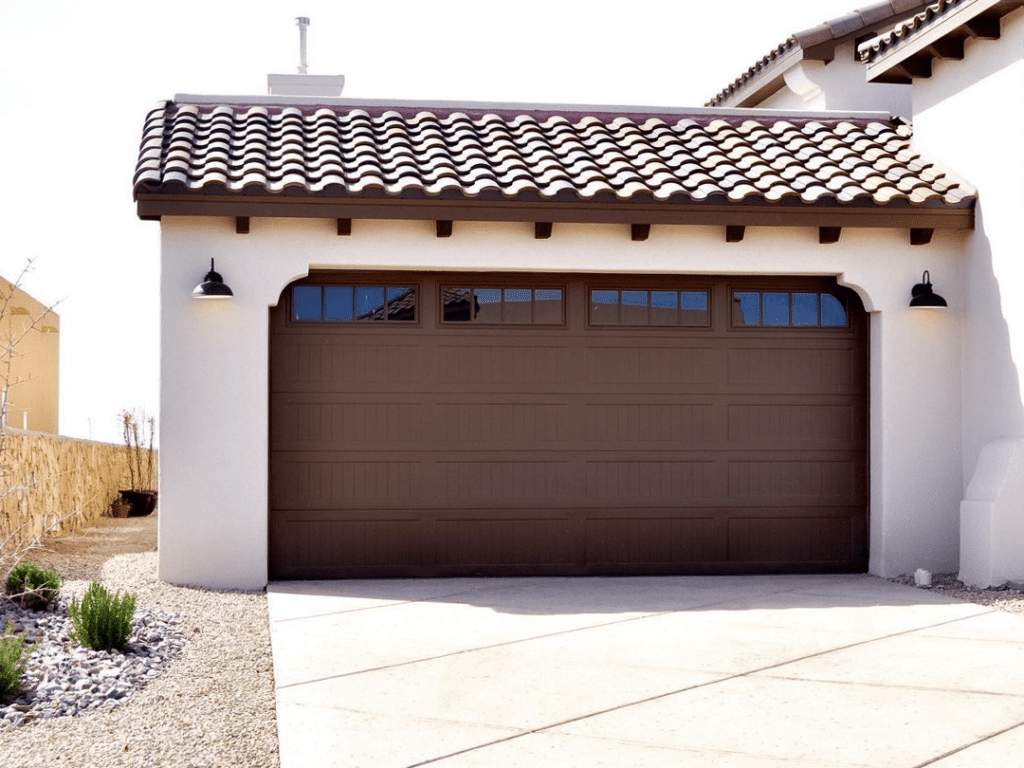
Garage door systems are designed to operate reliably for years, often with little direct homeowner attention. One reason problems go unnoticed is that many garage doors continue to function even as critical safety components slowly degrade. This gradual decline masks growing risks, allowing mechanical stress and safety vulnerabilities to build quietly over time. Because the door still opens and closes, the system appears healthy on the surface.
Sensors positioned near the door opening play a central role in determining how safely and smoothly movement occurs. These components are responsible for detecting hazards before force is applied, which is why garage door sensor alignment and replacement directly influence how the system decides whether to continue, stop, or reverse motion. When sensors malfunction, the consequences rarely appear immediately. Instead, problems accumulate subtly across safety margins, mechanical components, and overall system behavior.
Faulty detection affects far more than simple door operation. It influences safety thresholds, balance, wear patterns, and predictability. Small sensor issues often trigger secondary problems elsewhere in the system, and over time, these effects compound. Understanding the real consequences requires examining how sensor faults shape the garage door system as a whole.
How Faulty Sensors Reduce Safety Margins
Sensors create a protective buffer that prevents garage doors from moving when unsafe conditions are present. This buffer is designed to stop or reverse motion before contact occurs. When sensors begin to fail, that buffer does not disappear all at once. Instead, it gradually shrinks, reducing the system’s tolerance for resistance and increasing reliance on force-based responses.
As sensors degrade, doors may continue to close normally in most situations, which makes the problem difficult to detect. However, the margin for error becomes smaller with each cycle. What was once a wide safety zone becomes narrow, leaving less room for unexpected obstacles, pets, or people.
Find out why garage door sensors are a critical safety feature and play a much bigger role in daily operation than many homeowners realize by reading: Why Do Garage Door Sensors Matter More Than Most Homeowners Realize?
Safety Margin Reductions Caused by Sensor Faults
- Delayed detection allows increased force before stopping
- Intermittent response reduces predictability
- Misalignment misses low-profile obstructions
- Electrical degradation weakens communication
- Environmental interference disrupts detection
- Force compensation overrides preventative intent
As detection reliability declines, the system increasingly depends on force-based safety mechanisms. These mechanisms only respond after resistance is encountered, which is inherently more dangerous than prevention. The transition happens quietly, without alarms or obvious failures.
Safety erosion increases both injury risk and liability exposure. What makes this particularly concerning is that homeowners often remain unaware until a close call or incident occurs. Maintaining sensor reliability is essential to preserving the layered protection built into modern garage door systems.
Learn how garage door sensors use detection technology to sense obstructions and prevent accidents before they happen by reading: How Do Garage Door Sensors Detect Obstructions and Prevent Accidents?
How Sensor Faults Accelerate Mechanical Wear
When sensors fail to stop motion early, the garage door system applies more force during operation. That additional force does not disappear. Instead, it transfers directly to mechanical components, increasing stress on parts designed to operate within specific limits.
Each closing cycle with faulty detection adds incremental strain. While components may tolerate occasional overloads, repeated exposure accelerates wear and shortens lifespan. Over time, damage spreads across multiple parts, making repairs more complex and costly.
Explore the signs that indicate when garage door sensors need adjustment, cleaning, or full replacement to keep your system working safely by reading: When Should Garage Door Sensors Be Adjusted, Cleaned, or Replaced?
Mechanical Stress Patterns Linked to Sensor Issues
- Rollers experience higher impact loads
- Hinges absorb increased torque
- Cables endure uneven tension
- Tracks flex under forceful reversals
- Opener gears work harder
- Door panels experience bending stress
Mechanical wear caused by sensor faults often appears unrelated at first. A homeowner may notice noisy operation, uneven movement, or premature part failure that eventually leads to garage door spring replacement, without realizing that detection problems are the underlying cause. Understanding this connection helps clarify why addressing sensor issues early prevents widespread mechanical degradation.
Preserving detection accuracy protects not only safety but also mechanical balance. Sensors play a preventive role by reducing unnecessary force and extending the life of the entire system.
Why Faulty Sensors Cause Inconsistent Behavior
One of the earliest and most noticeable signs of sensor problems is inconsistent garage door behavior. Unlike complete system failures, detection issues often produce irregular symptoms that appear and disappear, making diagnosis difficult.
Faulty sensors may respond differently depending on lighting conditions, debris, temperature, or vibration. This variability leads to unpredictable operation, frustrating users, and encouraging temporary workarounds that only worsen the problem.
Behavioral Changes Caused by Sensor Degradation
- Unexpected reversals without visible obstruction
- Failure to close under specific lighting conditions
- Flickering indicator lights
- Inconsistent stopping positions
- Increased sensitivity to debris
- Temporary improvement after resets
When behavior becomes inconsistent, users often intervene manually by holding wall buttons, clearing the path repeatedly, or adjusting the door themselves. While these actions may restore operation temporarily, they increase system stress and bypass intended safety functions.
Over time, inconsistency worsens as sensor degradation progresses. Stable detection restores predictability, which is essential for safe and reliable operation. In many cases, inconsistency is not a nuisance but an early warning sign of deeper system imbalance.
How Sensor Faults Increase Property Damage Risk
Before injuries occur, property damage is often the first visible consequence of faulty detection. When sensors fail to intervene early, the garage door may make contact with objects before force-based systems respond. Even brief contact can cause damage.
These incidents are frequently dismissed as accidents, but they often share a common root cause. Detection did not function as intended, allowing movement to continue too long.
Property Damage Scenarios Linked to Sensor Problems
- Contact with vehicle bumpers or tailgates
- Impact with stored items
- Damage to the flooring transitions
- Weather seal compression
- Panel deformation
- Repeated contact with low-profile objects
Each incident adds wear and damage, even if it seems minor at first. Over time, repeated contact compounds these effects, leading to visible deterioration of both the door and the surrounding property.
Protecting property relies on early detection, not reactive force limits. Sensors prevent damage by stopping movement before contact occurs. When that protection fails, the system’s ability to prevent damage declines sharply.
How Sensor Issues Create Hidden System Strain
Garage door sensors influence how stress is distributed throughout the system during every closing cycle, making regular care and maintenance essential to consistent performance. When detection works properly, force application remains controlled and predictable. When sensors malfunction, excess force is introduced unevenly into the system.
This hidden strain does not always produce immediate symptoms. Instead, it accumulates quietly across multiple components, reducing overall system resilience.
Ways Sensor Faults Increase System Strain
- More frequent force reversals
- Uneven load distribution
- Increased vibration
- Higher electrical demand
- Reduced tolerance for minor obstructions
System strain becomes harder to isolate as multiple components show signs of wear. Without recognizing the sensor’s role, repairs may focus only on visible mechanical issues, leaving the root cause unresolved.
Maintaining sensor integrity reduces strain before it escalates. Balanced operation depends on accurate detection just as much as on well-maintained mechanical parts.
Why Sensor Problems Often Go Unnoticed
One of the most challenging aspects of sensor failure is how quietly it develops. Unlike broken springs or snapped cables, sensor issues rarely cause sudden, dramatic failures. Instead, they gradually erode system performance.
When the door continues to operate, users adapt to subtle changes, often without consulting a guide to garage doors that might explain why the behavior is unusual. A door that reverses occasionally or hesitates under certain conditions becomes part of the routine. This adaptation delays corrective action.
Additionally, visual inspection alone rarely reveals sensor degradation. Alignment may appear correct, housings may be intact, and wiring may be undamaged, even as internal performance declines.
Recognizing sensor issues requires attention to behavior patterns rather than obvious damage. Understanding this helps explain why problems persist unnoticed until risk or damage becomes unavoidable.
Preserving Long-Term Safety Through Sensor Awareness
Garage door sensors operate continuously in the background, quietly influencing safety, force, and balance. When they degrade, the system does not fail immediately. Instead, risks accumulate slowly beneath normal operation. Understanding how faulty sensors reduce safety margins, accelerate wear, and disrupt consistency highlights why these small components play such a critical role.
Maintaining sensor reliability is not simply about keeping the door moving. It is about preserving long-term safety, protecting property, and ensuring the garage door system continues to perform as designed.
If you want alternate conclusion headings, a more technical wrap-up, or alignment with service-page messaging, I can refine it further.
DoorJam Garage specializes in garage door solutions designed to elevate safety, reliability, and appearance. Services are delivered with transparency and precision to ensure homeowners receive lasting results. Leadership and hands-on expertise support a consistent, high-quality service experience. Every roll-up emphasizes customer confidence and satisfaction.
Contact us today or give us a call to get started with trusted garage door services.
Frequently Asked Questions
How do garage door sensors detect obstructions during operation?
Garage door sensors use an infrared beam that runs across the bottom of the door opening. We often see the system continuously monitor this beam while the door is closing. When the beam is interrupted, the sensor signals the opener to stop or reverse movement immediately.
Why is the infrared beam positioned so close to the ground?
The beam is placed low to detect small objects, pets, or children that may be in the door’s path. We frequently find that this placement ensures protection even for items that are not easily visible. Low positioning maximizes safety during closing cycles.
How does breaking the sensor beam prevent accidents?
When the beam is broken, the opener receives a signal that something is obstructing the doorway. We often see the door stop and reverse direction instantly. This rapid response prevents the door from closing on people, animals, or property.
Why do sensors only activate when the door is closing?
Sensors focus on the closing cycle because that is when injury or damage can occur. We frequently see opening movement poses little risk. By concentrating on closing, the system ensures safety where it matters most.
How do garage door sensors communicate with the opener?
Sensors send electronic signals through wiring connected to the opener unit. We often see these signals processed instantly to control door movement. Clear communication allows the opener to respond without delay.
Why does sensor alignment matter for proper detection?
Sensors must face each other directly to maintain a continuous beam. We frequently see slight misalignment interrupt the signal, even when nothing is present. Proper alignment ensures reliable obstruction detection.
How can environmental factors affect sensor detection?
Dust, sunlight, moisture, or debris can interfere with the infrared beam. We often find that environmental interference causes false triggers or missed detection. Regular cleaning and inspection help maintain accuracy.
Why do sensors sometimes cause the door to reverse unexpectedly?
Unexpected reversals often occur when the beam is interrupted unintentionally. We frequently see this caused by misalignment, dirt, or vibration. The system responds as designed to protect against potential hazards.
How do sensors work with other safety features?
Sensors operate alongside force settings and mechanical limits within the opener. We often see these systems working together to prevent unsafe operation. Multiple safeguards provide layered protection.
Why are garage door sensors essential for modern safety standards?
Modern safety regulations require sensor systems to reduce accident risk. We frequently see sensors play a key role in preventing injuries and property damage. Their reliability is central to safe garage door operation.