
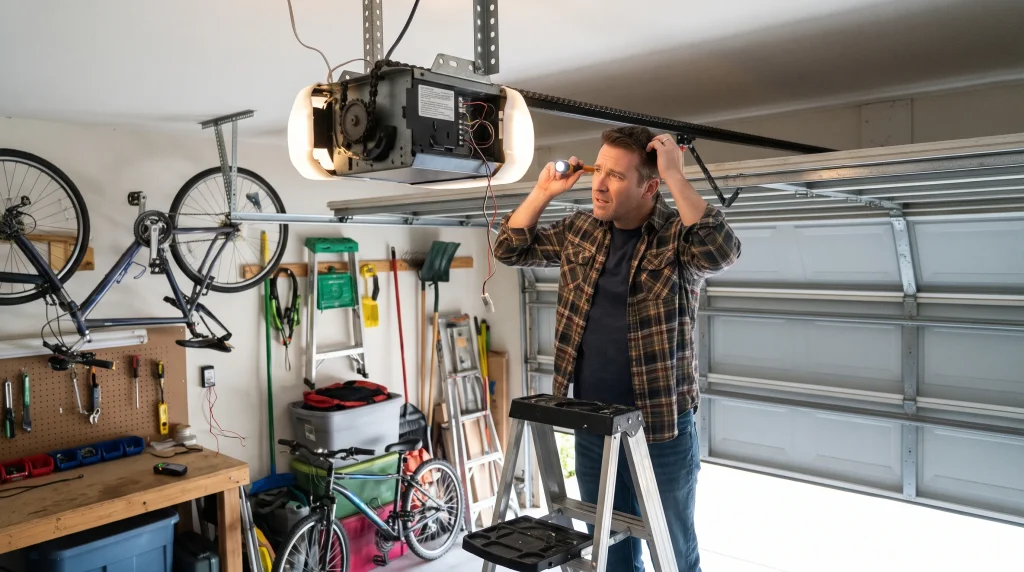
A garage door opener that keeps sending a signal on its own is almost always caused by a remote with a button physically stuck in the pressed position, sending a continuous open command even when no one is touching it. The four clearest signs are a remote that feels warm or sticky to the touch, an LED light that stays lit instead of blinking briefly, opening that happens whenever that specific remote is in a hot car or tight pocket, and a problem that stops the moment you remove that remote’s batteries. Ruling this out is one of the fastest garage door repair checks a homeowner can do without any tools, and it’s usually the first thing worth trying before assuming the opener itself is at fault.
Key Takeaways
- A stuck button sends a signal exactly like a real button press, so the opener has no way to tell the difference.
- Heat is a common trigger: a remote left in a hot car or on a sunny dashboard is more likely to stick.
- Removing the batteries from a suspect remote is a safe, reversible way to confirm it’s the source.
- Not every remote issue is a stuck button; interference and hardware failures can look similar.
- A remote that sticks once is likely to stick again, so replacing it is usually worth doing even after a temporary fix.
- Testing one remote at a time, rather than removing all batteries at once, tells you which specific remote is at fault.
Stuck Button vs. Other Remote Problems
Symptom | Stuck Button | Other Cause |
Opens when remote sits in a hot car | Very likely | Less likely |
LED stays lit continuously | Very likely | Rare |
Stops when that remote’s batteries are removed | Confirms stuck button | Problem continues if it’s not the remote |
Happens with all remotes removed | Rules out stuck button | Points to interference or a wiring issue |
Button feels physically depressed | Very likely | Not applicable |
Only happens with an older, well-worn remote | Very likely | Less likely with a newer remote |
1. The Door Opens With No One Pressing a Button
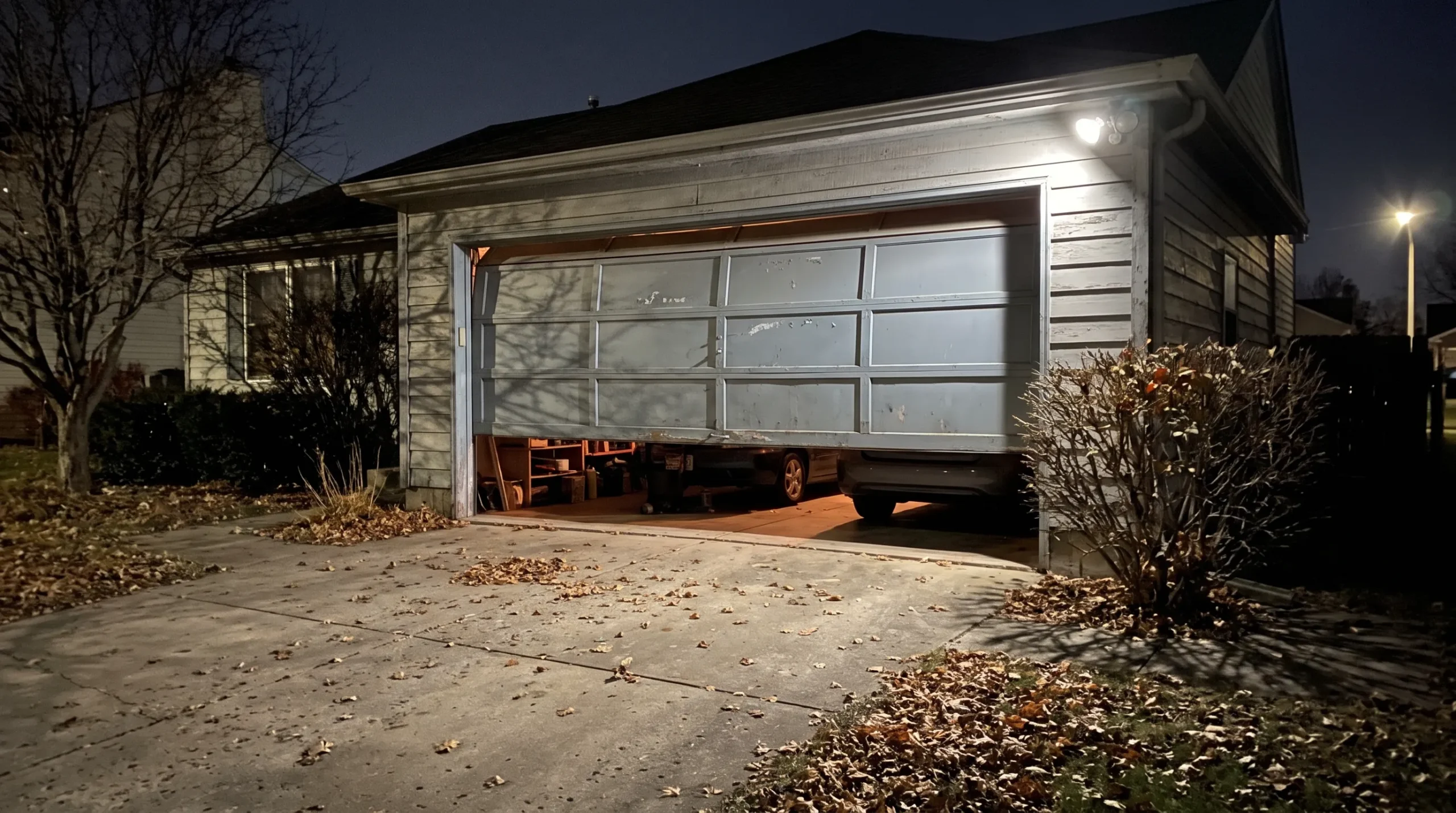
Symptom: The garage door opens on its own, often at inconvenient times, with no one visibly near a remote or wall switch.
Most likely cause: One remote’s button is mechanically stuck down, continuously transmitting the open signal to the opener’s receiver.
Fix steps:
- Collect every remote in the house and remove the batteries from each one, one at a time
- Wait a day after each removal to see if the phantom opening stops
Call a pro if: the opening continues after every remote’s batteries have been removed. That points to the opener itself rather than a remote.
How to Test Which Remote Is Causing Your Garage Door to Open Itself
Pull the batteries from one remote at a time over a day. The moment the phantom opening stops, you’ve found the stuck remote, and it’s safe to remove it from rotation for good.
A closer look: Older remotes with worn rubber buttons are more prone to this than newer ones, since the rubber loses its spring-back over years of use. If your household has both an old and a newer remote, test the older one first.
If a stuck remote isn’t the cause, see Why Is My Garage Door Opening By Itself? 8 Common Causes and Fixes for the other seven possibilities.
2. The Remote’s LED Light Stays On or Blinks Continuously
Symptom: A remote’s small indicator light stays lit solid instead of blinking briefly with each press, or blinks in an unusual, rapid pattern.
Most likely cause: A continuously lit LED usually means the button circuit is closed and staying closed, which is the same condition causing the phantom signal.
Fix steps: Check each remote’s LED behavior with fresh batteries installed. A remote whose light won’t turn off is almost certainly the stuck one.
Call a pro if: you check every remote’s LED and none of them show this behavior, since the cause may be elsewhere. If you’d rather replace the whole system at that point, a full garage door opener upgrade often comes with a more reliable remote paired directly to it.
If you’re shopping for a replacement remote or a full opener upgrade, Angi’s guide to garage door opener styles breaks down which type of opener and remote setup suits different homes.
A closer look: Testing the LED is often quicker than the full battery-removal process, since you can check it in seconds without waiting to see if the phantom opening stops. Press each remote once and watch how the light behaves: a quick blink and release is normal, while a light that stays on even after you let go is the clearest possible sign of a stuck button.
If every remote checks out and the door still opens on its own, the cause may be inside the opener itself; see How Do You Know If Your Garage Door Opener’s Circuit Board Is Failing? 5 Warning Signs.
3. The Door Responds Even When the Remote Is Untouched in a Bag or Pocket
Symptom: The garage opens while the remote sits untouched inside a purse, backpack, or pocket, sometimes triggered by pressure from other items pressing against the button.
Most likely cause: Physical pressure from other objects in a tight space is holding the button down, even without anyone intentionally pressing it.
Fix steps:
- Notice whether the opening correlates with the remote being carried in a specific bag or a full pocket
- Move the remote to a clip or a looser space to confirm the pattern
Call a pro if: the opening continues even when the remote is kept somewhere with no pressure on it at all.
Why Heat and Pressure Make a Remote More Likely to Stick
Heat softens the plastic and internal contacts of a remote’s button mechanism just enough that it can stay depressed under pressure instead of springing back, which is why hot cars and full pockets are common triggers throughout warmer months.
A closer look: A remote clipped loosely to a visor or a keyring tends to hold up far better over time than one buried in a bag full of other items. If you’ve noticed the issue mostly happens after someone’s been carrying a particular bag, that’s worth testing before assuming the remote itself is defective. Summer months tend to bring more of these calls than any other season, simply because car interiors regularly reach temperatures well beyond what any remote was designed to handle for extended periods.
4. Opening Happens at Random Times, Not Tied to Anyone Arriving Home
Symptom: The door opens at odd hours with no correlation to anyone’s schedule, sometimes overnight or while the house is empty.
Most likely cause: A remote left somewhere with sustained pressure on the button, like inside a glove box or under other items in a car, can trigger this at any hour.
Fix steps: Think through where every remote in the household typically sits, especially any that spend time in a vehicle, and check for anything that could be pressing on the button.
Call a pro if: you’ve accounted for every remote’s location and the random-timing pattern continues regardless.
Since a stuck button bypasses the opener’s normal safety checks, DASMA’s garage door opener safety guidance recommends testing the auto-reverse safety feature regularly, independent of whatever is causing the phantom signal. A routine garage door tune-up usually includes checking remote responsiveness as part of the visit, which can catch this kind of issue early.
A closer look: Random overnight openings are the pattern that worries homeowners most, understandably, but they’re rarely mysterious once you check where every remote spends its nights. A remote left in a car parked in the driveway, with something shifted against it after a drive, is a far more common explanation than anything wrong with the opener itself. Checking the glove box and center console of every vehicle with a remote inside is a good place to start before assuming anything more serious is happening.
If every remote is accounted for, a faulty wall switch is the next thing worth ruling out; see Can a Faulty Wall Switch Make Your Garage Door Open By Itself? 5 Signs to Check.
Stuck-Button Red Flag Checklist
- Check whether any remote’s LED stays lit continuously instead of blinking briefly
- Feel each remote’s main button for one that stays physically depressed
- Note whether the pattern lines up with a remote sitting in a hot car or full pocket
- Remove batteries from one remote at a time and track whether the opening stops
- Compare an older, well-used remote against a newer one if your household has both
Running through this list rarely takes more than a day, and it’s worth doing before assuming the problem lies anywhere more complicated than a single remote.
What This Means for Your Next Fix
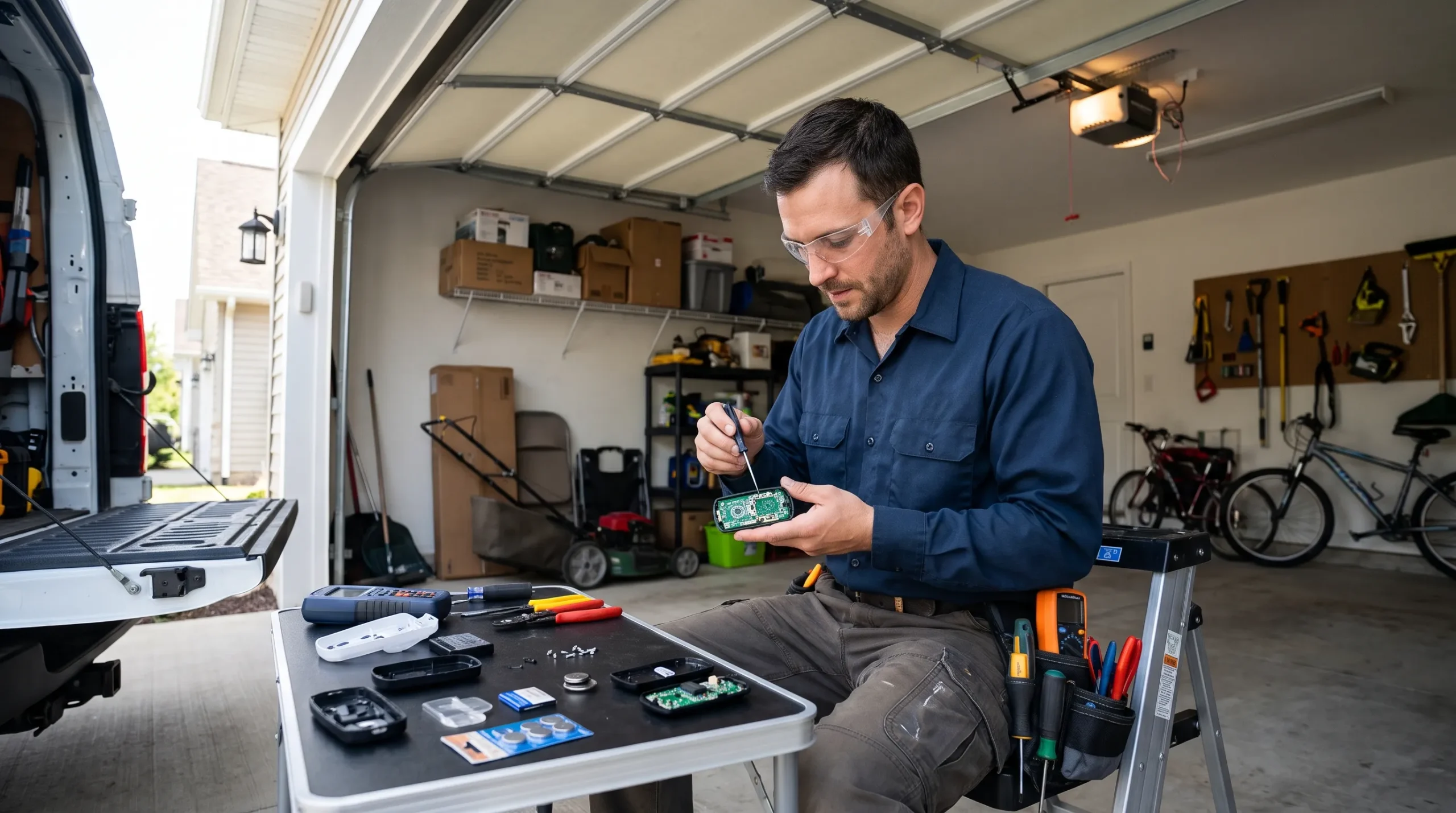
A stuck remote button is one of the easiest garage door repair issues to rule out, since it takes nothing more than removing a few batteries and watching what happens. Most homeowners can identify the exact remote within a single day using the checks above, without needing to touch the opener itself or open up any wiring.
DoorJam Garage gets calls about this fairly often, and once we confirm it’s a stuck button rather than a hardware fault, the fix is usually as simple as replacing that one remote. If the phantom opening continues after ruling out every remote in the house, contact us or give us a call.