
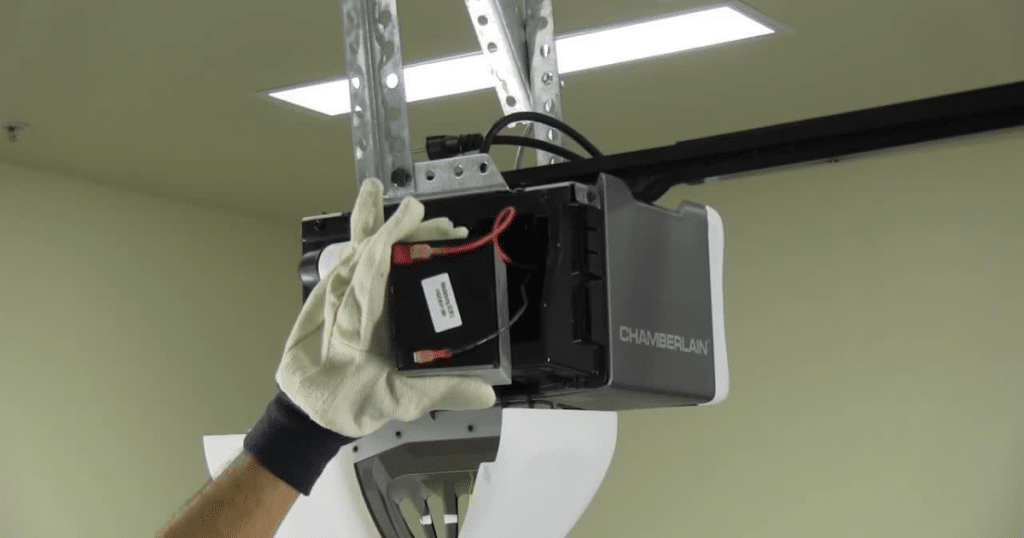
Your garage door opener is acting up, and you are not sure whether to reprogram it or replace it entirely. It is a question more homeowners face than you might think, and the answer is not always obvious. Sometimes a simple reprogram is all it takes to get things working again. Other times, continuing to patch an aging system ends up costing more than a full replacement would have from the start.
Making the right call comes down to a few key factors: the age of your system, the nature of the problem, the cost of repairs versus replacement, and what features matter most to your household. This guide walks you through the clearest signs that point toward each option so you can make a confident, informed decision without guessing.
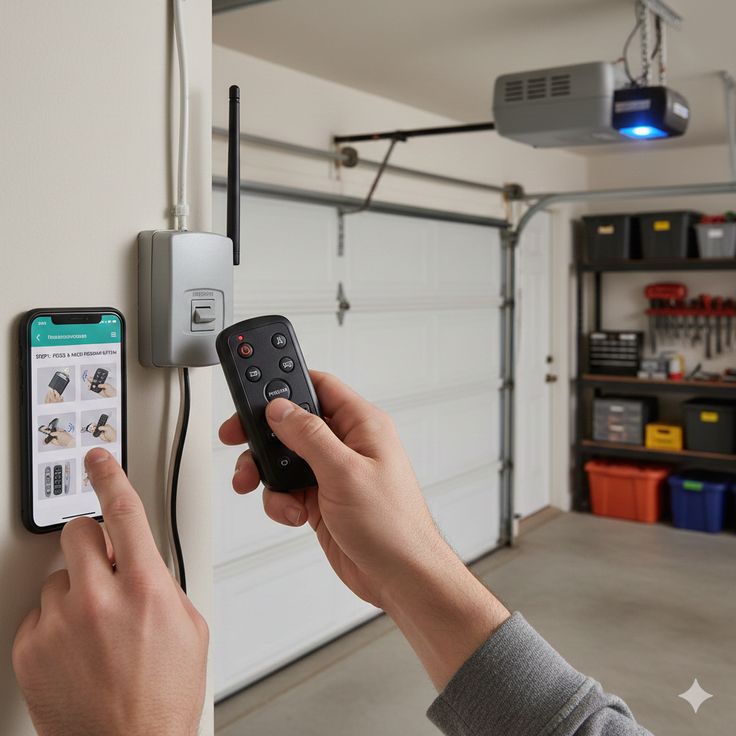
How Old Is Your Garage Door Opener?
Age is often the single most telling factor in the replace vs. reprogram decision. An opener that is only a few years old and running into a programming issue is almost certainly worth reprogramming. An opener that is pushing 20 years is a different conversation entirely.
Here is a general age-based framework to start with:
- Under 7 years old. Reprogramming is almost always the right first step. The system is relatively new, parts are widely available, and the hardware should have plenty of life left.
- 7 to 15 years old. This is the evaluation zone. Age alone does not determine the answer here. The type and frequency of problems matter more at this stage.
- 15 years and older. Replacement deserves serious consideration. Systems this old often lack modern safety features, compatible parts are harder to source, and the motor is approaching the end of its reliable lifespan.
- 20 years or older. Replacement is usually the smarter financial and safety decision. Continuing to repair a system this old often costs more over time than simply starting fresh with a new unit.
From dead batteries to signal interference to sensor misalignment, Why Your Garage Door Opener Won’t Sync and How to Repair It covers every reason your system may be failing and what to do about each one.
What Type of Problem Are You Actually Dealing With?
The nature of the problem matters just as much as the age of the system. Some issues are straightforward programming repairs. Others are symptoms of deeper mechanical or electrical failures that no amount of reprogramming will resolve.
Here is how to categorize common problems:
- Reprogram first if your remote or keypad stopped working after a battery change, after a power outage, or without any obvious cause. These are classic programming issues that a reset and reprogram usually resolve quickly.
- Reprogram first if you moved into a new home and need to clear old codes and set up your own remotes and keypads. This is a routine programming task, not a hardware problem.
- Consider replacement if the motor runs, but the door does not move, which points to a mechanical failure beyond the programming system.
- Consider replacement if the door moves slowly, unevenly, or makes grinding or straining sounds during operation. These are signs of motor wear or drive system deterioration.
- Consider replacement if the opener works inconsistently with no clear pattern, suggesting an internal logic board issue that is often more expensive than a garage door repair than to replace.
Have You Already Tried Reprogramming More Than Once?
If you have already gone through the reprogramming process correctly and the problem keeps coming back, that pattern is telling you something important. Repeated sync failures after successful reprogramming are rarely a programming issue. They are a hardware issue wearing a programming mask.
Watch for these patterns:
- The opener syncs successfully but loses connection within days or weeks
- Reprogramming works temporarily, but the same problem returns each time.
- Multiple remotes and keypads all fail to hold a sync.
- A technician has already repaired the unit once, and the issue has returned.
What Are Repairs Actually Going to Cost You?
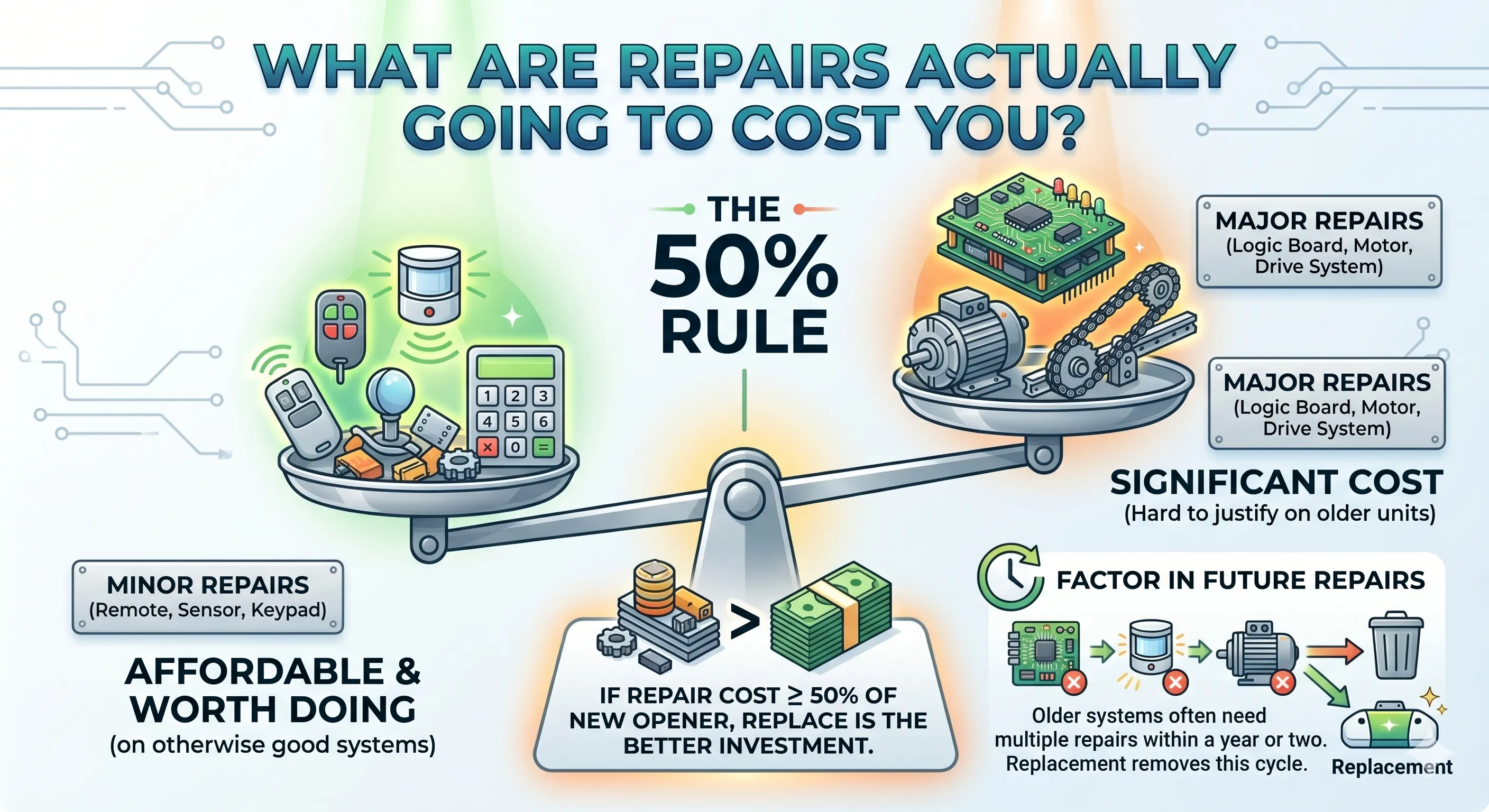
Cost is a practical factor that often clarifies the decision quickly. Before committing to a repair, it helps to understand what the repair involves and how that cost compares to investing in a new system.
Here is how to think through the cost comparison:
- Minor repairs, such as replacing a remote, sensor, or keypad, tend to be affordable and are worth doing on a system that is otherwise in good shape.
- Major repairs, such as replacing a logic board, motor, or drive system, can cost a significant amount. On an older opener, spending that amount on a repair may be difficult to justify when a new unit offers modern features, a full warranty, and a fresh lifespan.
- A useful general rule is that if the repair cost equals or exceeds 50 percent of the price of a new comparable opener, replacement is usually the better investment.
- Factor in future repairs as well. An aging system that needs one major repair often needs another within a year or two. Replacement removes that cycle entirely.
Does Your Current Opener Have the Safety Features It Should?
Safety standards for residential garage door openers have improved significantly over the past two decades. If your system predates some of these requirements, continuing to use it may mean living with safety gaps that a newer unit would eliminate.
Here is what to check on your current system:
- Auto-reverse function
- Photoelectric sensors
- Rolling code technology
- Manual release mechanism
How Often Do You Use Your Garage Door?
Usage frequency directly affects how quickly an opener wears out and how much daily reliability matters to your household. A garage door that opens and closes multiple times a day puts significantly more demand on the system than one used only occasionally.
Consider your usage pattern honestly:
- High-frequency users (four or more cycles per day) put more wear on the motor, drive system, and components than average. For these households, an aging opener is closer to the end of its reliable life than the calendar age alone might suggest.
- Low-frequency users who open the garage once or twice a day may get more useful life out of an older system before replacement becomes necessary.
- Households with multiple drivers who each use the garage regularly should factor in total daily cycles rather than thinking of it as one door used lightly.
- Smart opener features become more valuable for high-frequency users who want monitoring, scheduling, and remote access as part of their daily routine.
Are You Missing Features That Matter to You Now?
Technology in garage door openers has advanced considerably over the past decade. If your current system was installed before smart home integration, battery backup, or advanced security features became standard, replacement opens the door to upgrades that genuinely improve daily life.
Features worth considering in a newer system:
- Smartphone control and monitoring so you can open, close, and check your door status from anywhere.
- Real-time alerts that notify you when the door opens or closes, which is useful for keeping track of arrivals and departures.
- Battery backup that keeps the opener functioning during power outages, which is especially practical in areas that experience severe weather.
- Quieter drive systems are a meaningful upgrade if your current chain drive opener shakes the ceiling of a room above the garage.
- Improved rolling code security if your current system is running on older fixed-code technology.
If the features you want are not available as add-ons to your existing unit and would require a full replacement anyway, that makes the decision more straightforward. For a detailed breakdown of what to prioritize in a new system, take a look at What to Look for When Buying a Garage Door Opener before making your final choice.
Has a Professional Already Flagged the System as a Concern?
If a garage door technician has inspected your opener and raised concerns about its condition, that professional assessment is worth taking seriously. Technicians who work on these systems daily have a realistic sense of how much life a unit has left and whether a repair is genuinely worth doing. In many cases, a routine garage door tune-up is what surfaces these concerns before they turn into a complete system failure.
Pay attention to these professional observations:
- A recommendation to replace rather than repair from a technician who has inspected the unit directly is one of the clearest signals available.
- Difficulty sourcing parts for your model is a practical limitation. If the parts needed to repair your opener are discontinued or hard to find, repair becomes less viable regardless of cost.
- A technician noting multiple worn components rather than a single isolated issue suggests the system is deteriorating broadly, not experiencing one fixable problem.
- Concerns about the door itself, rather than just the opener. If the technician notes issues with the springs, tracks, or panels in addition to the opener, a full evaluation of the entire system makes sense before investing in any single component.
If you want to make sure the technician inspecting your system is qualified to give you a reliable recommendation, the International Door Association explains how to find a qualified garage door professional for an honest system assessment.
Is the Reprogramming Problem Actually a Door Problem in Disguise?
Sometimes what looks like a programming or opener issue is actually caused by a problem with the door itself. A door that is out of balance, has damaged springs, or runs on worn tracks puts extra strain on the opener motor, which can cause performance issues that mimic opener failures.
Here is how to check whether the door is contributing to the problem:
- Disconnect the opener and lift the door manually
- Listen for grinding, scraping, or popping sounds
- Check for visible damage.
- Have a technician assess the full system
The Spruce covers how to tell if your garage door itself is causing opener performance issues, which is a practical starting point if you are unsure whether the problem lies with the opener, the door, or both.
If your opener has been struggling with sync issues as part of this broader problem, our guide on Why Your Garage Door Opener Won’t Sync and How to Repair It covers the most common causes in detail.
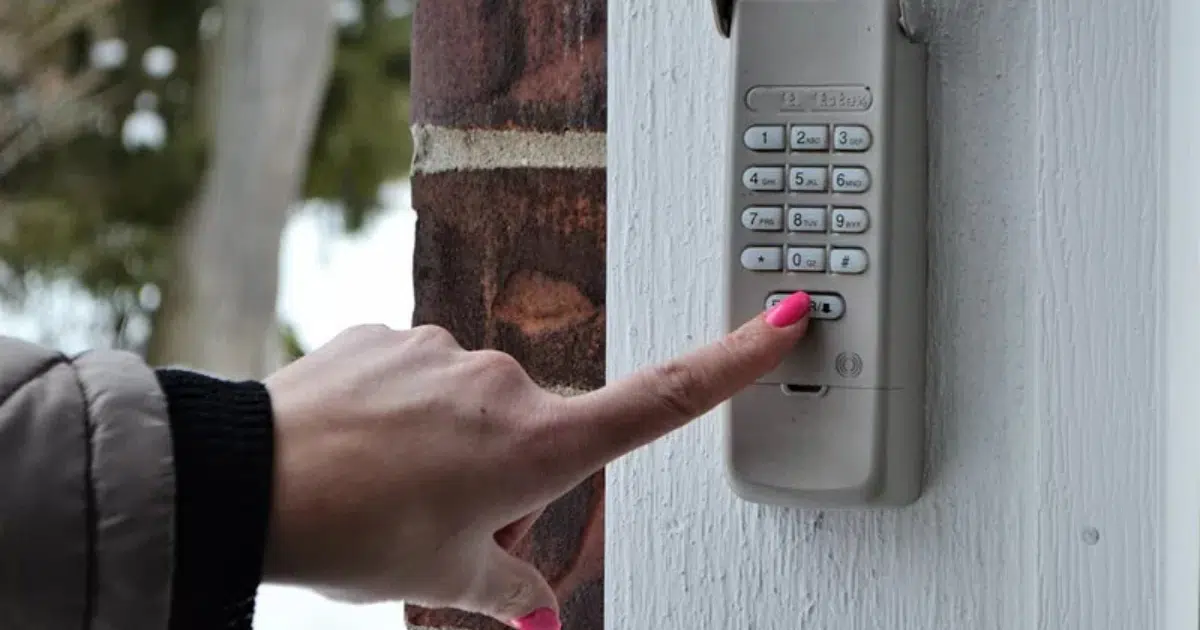
What Is the Smarter Long-Term Investment for Your Home?
At the end of the day, the replace vs. reprogram decision is a financial and practical one. The goal is to spend money where it gives you the most reliable return over time, not to avoid spending money in the short term at the cost of repeated problems.
Here is a simple decision framework to close out your evaluation:
- Reprogram if: the opener is under 10 years old, the problem is clearly a programming issue, and the system has no other performance concerns.
- Reprogram if: the repair is straightforward, affordable, and the system has a clean track record; otherwise.
- Replace if: the opener is 15 years or older, especially if it lacks modern safety features or compatible parts.
- Replace if: repair costs are high relative to replacement costs, or if the same problem has already been repaired before.
- Replace if: you want smart home integration, quieter operation, or improved security that your current system cannot provide.
Taking an honest look at all of these factors together gives you a clear answer in most situations. And once you have a new system in place, our step-by-step guide on How to Program a Garage Door Opener walks you through getting everything set up correctly from the start.
Make the Right Call for Your Garage and Your Home
Deciding between reprogramming and replacing your garage door opener does not have to be a guessing game. When you look honestly at the age of the system, the nature of the problem, the cost of repairs, and the safety features in place, the right answer usually becomes clear. Staying ahead of the decision rather than waiting for a complete failure gives you more options and more control over the outcome.
If you are in Wake Forest, NC, and are not sure which direction makes the most sense for your situation, DoorJam Garage can help you evaluate your current system and give you an honest, professional recommendation. Contact us or give us a call today, and we will make sure you get the right solution for your garage without any guesswork.