
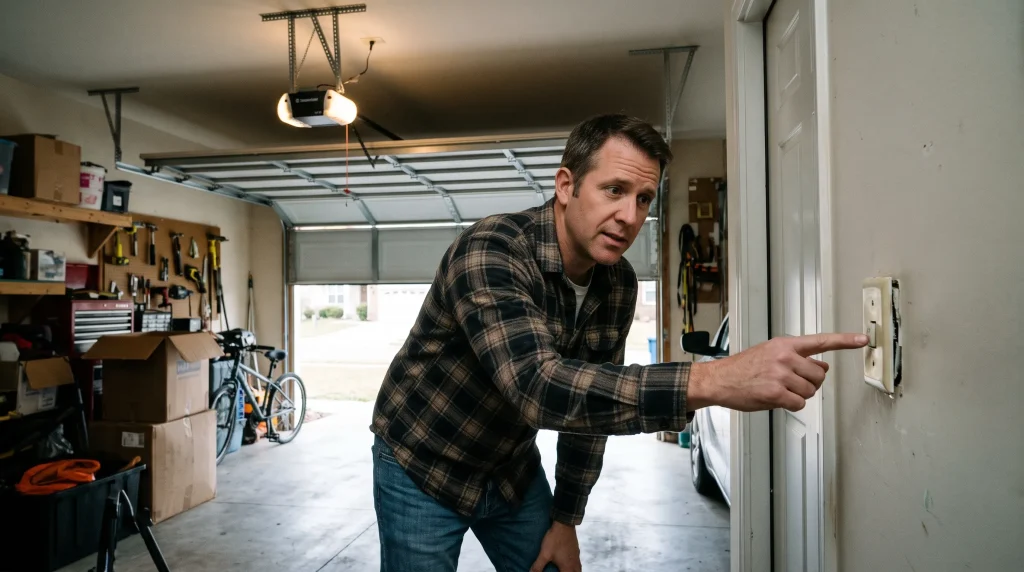
Yes, a faulty wall-mounted control switch can make a garage door open by itself, usually because an internal short in the switch or its wiring sends a continuous open signal to the opener, even with every remote’s batteries removed. The five clearest signs are: the door still opens with every remote disabled, the switch feels warm or shows visible wear, disconnecting the switch’s wires stops the problem, the switch is old, cracked, or missing its cover plate, and the issue started right after recent wall work or a switch swap. This is one of the easier garage door repair issues to isolate, since testing it usually just means disconnecting two wires and watching what happens.
Key Takeaways
- A bad wall switch bypasses every remote entirely, so ruling out remotes first helps confirm the switch is the source.
- Physical damage, like a cracked housing or exposed wiring, is often visible without any tools.
- Disconnecting the switch from the opener’s terminals is a safe, reversible way to test this cause.
- Switches installed or replaced recently are more likely to have a wiring mistake than an old switch that’s suddenly failing.
- A switch that’s simply worn out from years of button presses is different from one with an actual electrical short, and the fix differs for each.
Wall Switch Fault vs. Other Causes
Symptom | Wall Switch Fault | Other Cause |
Opens with every remote’s batteries removed | Possible | Also possible with circuit board failure |
Stops when switch wires are disconnected | Confirms wall switch | Problem continues if it’s not the switch |
Switch feels warm or shows visible damage | Likely | Not applicable |
Started right after wall work or a switch swap | Very likely | Less likely |
Flickering motor-unit lights alongside the issue | Uncommon | Points more toward circuit board failure |
Switch is original to an opener installed decades ago | More likely with age | Less relevant to circuit board timing |
1. The Door Opens Even With Every Remote’s Batteries Removed
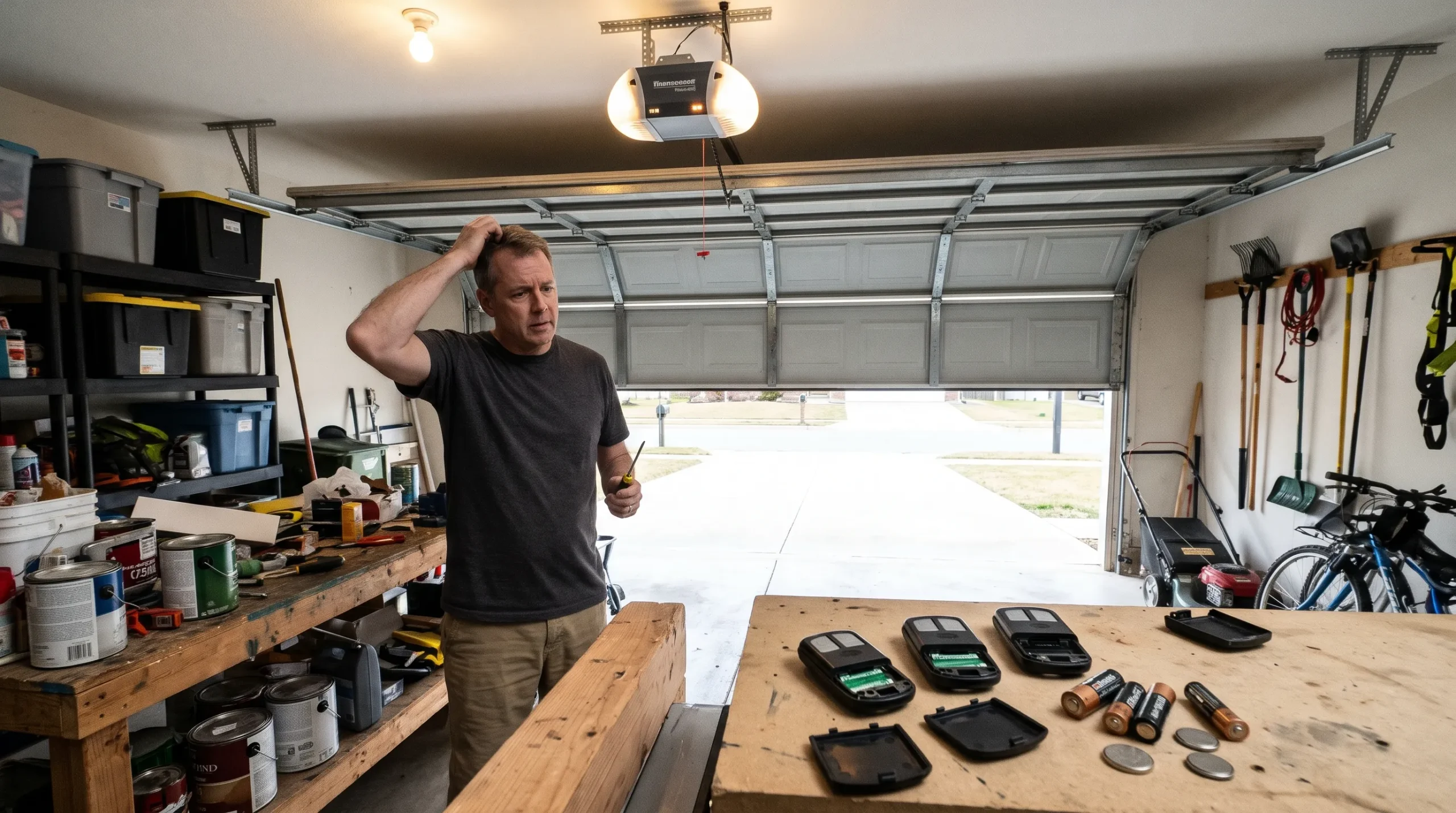
Symptom: The garage door continues to open on its own after every remote in the house has had its batteries removed.
Most likely cause: With every remote ruled out, the wall switch and its wiring become the next most likely source, since it’s a second direct input to the opener beyond the remotes.
Fix steps: Confirm every remote is truly disabled first, then move on to testing the wall switch specifically before assuming it’s a deeper hardware issue.
Call a pro if: you’ve ruled out every remote and the wall switch test below doesn’t resolve it either, since that points toward the circuit board instead.
How to Confirm It’s the Wall Switch and Not the Opener Itself
The fastest way to isolate the switch is to disconnect its two wires from the opener’s control terminals entirely. If the phantom opening stops the moment the switch is disconnected, you’ve found the source.
A closer look: This test matters because it’s the cleanest way to separate a wall switch problem from a circuit board problem, two causes that otherwise look nearly identical from the outside. Both can produce a door that opens with every remote disabled, so the wire-disconnect test is really the deciding factor between the two.
If disconnecting the switch doesn’t stop the problem, see How Do You Know If Your Garage Door Opener’s Circuit Board Is Failing? 5 Warning Signs for the next step.
2. The Wall Switch Feels Warm or Shows Visible Wear
Symptom: The switch’s housing feels slightly warm to the touch, or shows cracking, discoloration, or a button that no longer clicks the way it used to.
Most likely cause: A short inside the switch can generate a small amount of heat even when it’s not being pressed, and visible wear often accompanies an aging internal mechanism that’s starting to fail.
Fix steps: Turn off power to the opener at the breaker before touching the switch, then visually inspect it for:
- Cracks in the housing
- Discoloration around the button or wiring
- A button that stays stuck instead of clicking normally
Call a pro if: you see any of these signs and aren’t comfortable replacing the switch yourself.
If you’d rather have a professional look over the whole system rather than replace a single part yourself, Angi’s guide to inspecting and maintaining a garage door covers what a full inspection typically includes.
A closer look: Warmth is the harder of the two signs to notice, since most people never touch their wall switch’s housing directly. If you’re checking for this specifically, do it shortly after the phantom opening happens rather than at a random time, since any heat buildup is more likely to still be present.
For the other seven possible causes, if this doesn’t match, see Why Is My Garage Door Opening By Itself? 8 Common Causes and Fixes.
3. Disconnecting the Wall Switch Wires Stops the Problem
Symptom: After disconnecting the two wires running from the wall switch to the opener’s control terminals, the phantom opening stops entirely.
Most likely cause: This directly confirms the switch or its wiring, rather than the garage door opener‘s internal electronics, as the source of the false signal.
Fix steps: With power off, disconnect the two low-voltage wires at the opener’s terminal block. Test the opener using only a remote for a day or two to confirm the phantom opening has stopped.
Call a pro if: you’re not comfortable working at the opener’s terminals, even though this is generally low-voltage and low-risk compared to the home’s main electrical wiring.
What a Confirmed Wall Switch Test Actually Tells You
Once disconnecting the switch stops the problem, you know definitively that the fix is either a switch replacement or a wiring repair, not a deeper opener issue. That narrows the job significantly before you even call anyone.
4. The Switch Is Old, Cracked, or Missing Its Cover Plate
Symptom: The switch itself shows visible signs of age or damage:
- Looks visibly aged overall
- Has a missing or cracked cover plate
- Has exposed wiring at the connection points
Most likely cause: A missing cover plate exposes the switch’s internal contacts to dust and moisture over time, which can eventually create a short between them.
Fix steps: Replace the switch and its cover plate as a pair rather than just patching the existing one, since a compromised housing rarely protects the internals reliably once damaged.
Call a pro if: the wiring behind the switch also looks damaged or if you’re unsure how to match the replacement switch to your opener’s terminal requirements.
A closer look: A missing cover plate is easy to overlook if the switch still seems to work most of the time, but dust buildup on exposed contacts is a slow process. What starts as an occasional phantom opening can become a daily occurrence as more debris accumulates inside the housing over subsequent months. A garage door tune-up typically includes checking the wall switch and its cover for exactly this kind of wear.
5. The Problem Started After Recent Wall Work or a Switch Replacement
Symptom: The phantom opening began shortly after any wall work near the switch, a repaint, a switch swap, or an electrician working in that part of the garage.
Most likely cause: A wiring mistake made during the work, like two wires touching where they shouldn’t or a terminal screw left loose, can create a continuous signal without the switch itself being defective.
Fix steps: Recall exactly what work was done and when, since that timeline is valuable information even if you can’t identify the specific wiring issue yourself.
Call a pro if: the timing lines up with recent work. A wiring mistake is usually a quick fix for a technician once the timeline points them in the right direction.
If the wiring issue turns out to be more involved than a quick fix, the International Door Association’s care and maintenance directory can help you find a qualified professional in your area to handle it properly.
A closer look: Even work that seems completely unrelated to the garage, like a bedroom repaint or a light fixture swap on the same electrical circuit, can occasionally disturb a shared wire path. If the timing is close but the work wasn’t directly at the switch itself, it’s still worth mentioning to whoever ends up diagnosing the issue.
If you haven’t yet ruled out a stuck remote as a simpler explanation, see Why Does My Garage Door Opener Keep Sending a Signal? 4 Signs of a Stuck Remote Button.
Wall Switch Red Flag Checklist
- Confirm the door opens even with every remote’s batteries removed
- Check the switch housing for cracks, warmth, or a missing cover plate
- Disconnect the switch’s two wires at the opener and test with a remote only
- Recall whether any wall work or switch replacement happened before the issue started
- Note whether the switch’s button still clicks normally or feels loose and worn
A Simple Test With a Clear Answer
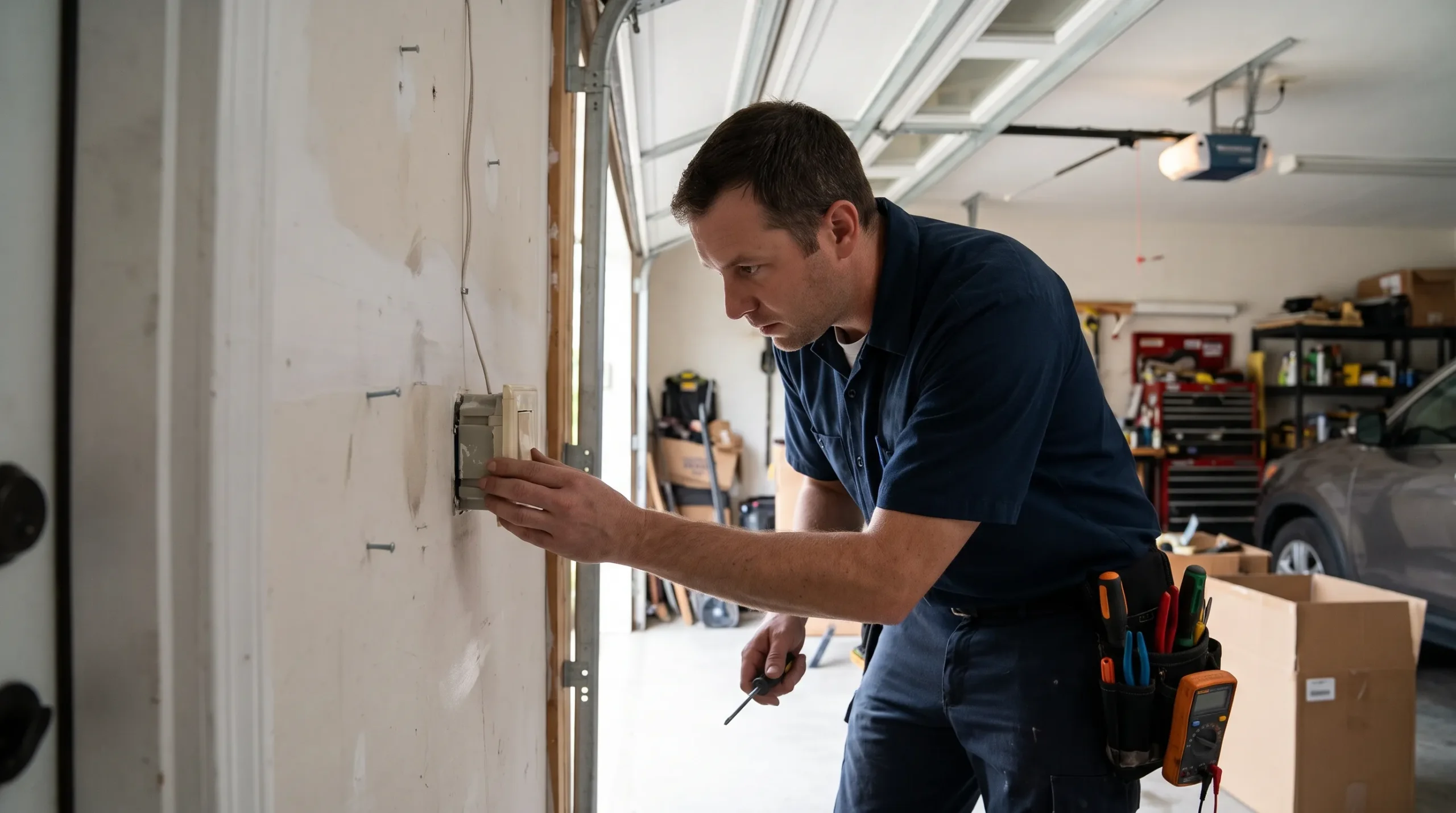
Unlike interference or a failing circuit board, a wall switch problem is one of the few causes on this list you can test with total certainty, just by disconnecting two wires. If that stops the phantom opening, you’ve found your answer, and the rest is simply deciding whether to replace the switch yourself or have someone else handle it.
DoorJam Garage sees this most often on older switches that have never been replaced since the opener was installed, sometimes decades earlier. If your wall switch test points to this cause, contact us or give us a call.