
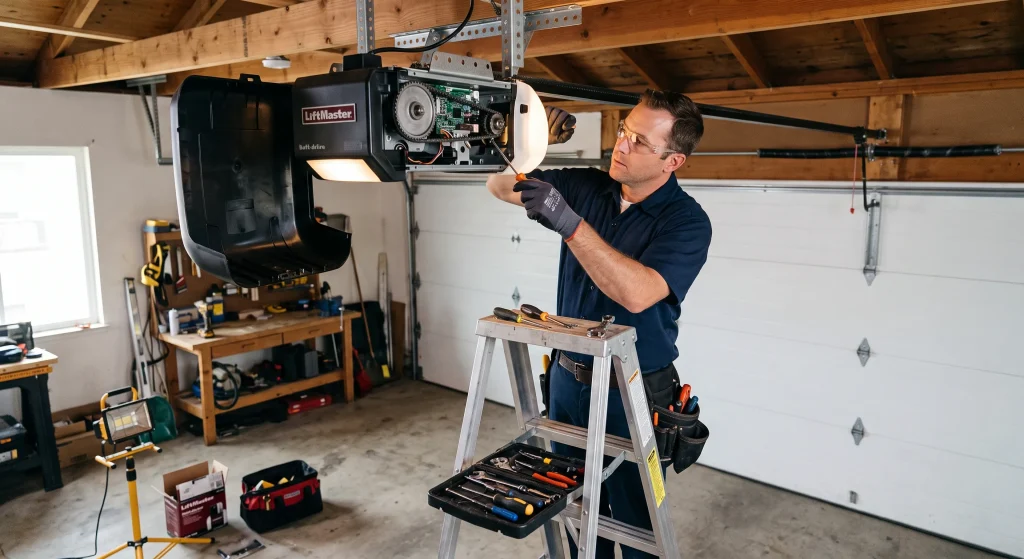
A garage door opener should get a professional service check once a year, covering the chain or belt tension, motor, and safety sensors. Homeowners should also test the auto-reverse safety feature once a month, which takes about thirty seconds and is the single most commonly skipped maintenance task on the whole door. Between those two intervals, an opener that’s cycling normally and reversing correctly on contact doesn’t need anything else.
Key Takeaways
- Annual professional service covers chain/belt tension, motor wear, and sensor alignment.
- Monthly homeowner test: the auto-reverse safety check takes thirty seconds and needs no tools.
- Belt-drive openers need slightly less frequent attention than chain-drive, but both still need the annual visit.
- A straining or slow-moving opener is a wear symptom, not just an annoyance, and shouldn’t wait for the annual visit.
- Failed auto-reverse is a safety issue, not a convenience one. It should be addressed immediately, not scheduled for later, to avoid turning into an emergency garage door repair.
- Most openers last well over a decade with regular service, but neglect shortens that window considerably.
Opener Warning Signs at a Glance
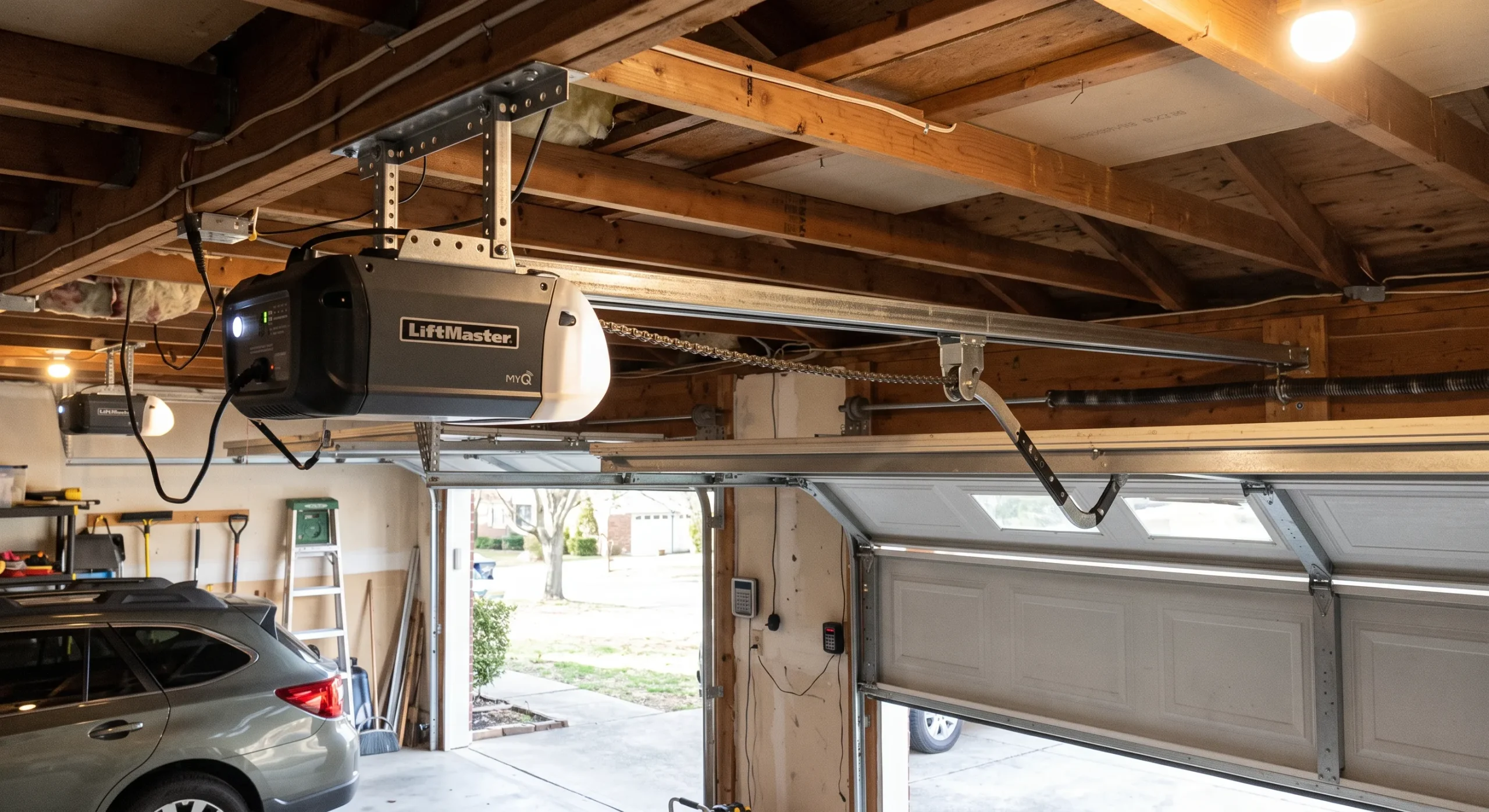
Component | Warning Sign | What It Usually Means |
Safety sensors | Door doesn’t reverse when its path is blocked | Sensors are dirty, misaligned, or have a wiring issue |
Sensor indicator lights | Blinking instead of solid | Alignment or power issue at the sensor |
Chain or belt | Grinding noise or visible slack | Tension has drifted from normal use |
Motor gears | Door moves noticeably slower than before | Internal gears are wearing down |
Auto-reverse feature | Door keeps closing after hitting something | Safety failure. Stop using the opener until it’s fixed |
How Often Should a Garage Door Opener Be Serviced Overall?
Plan on one professional visit per year, timed with the rest of your door’s annual maintenance checklist.
This lines up with LiftMaster’s own maintenance guidance, which recommends monthly safety-reversal testing for all residential openers regardless of brand or age. The annual visit is also when a technician catches the kind of gradual wear that a homeowner check simply isn’t set up to find, since chain tension and gear wear don’t announce themselves the way a failed sensor test does.
If you haven’t set up a seasonal rhythm yet, read How Often Should Garage Doors Be Serviced? A Season-by-Season Maintenance Checklist. Add a monthly self-test that takes less time than checking the mail.
How to Build an Opener Maintenance Habit That Actually Sticks
The monthly sensor test is the piece that gets skipped, not because it’s hard, but because there’s no natural trigger to remember it. Tying it to something already recurring, like the first of the month or a bill due date, works better than relying on memory alone. Some homeowners find it easier to fold the test into an existing habit, like the day they take the trash bins out, rather than treating it as a separate task to remember on its own.
Call a pro if: it’s been over a year since the opener was professionally serviced, or you notice the door taking noticeably longer to open or close than it used to.
How Often Should Garage Door Safety Sensors Be Tested?
Test the sensors once a month. This is separate from the annual professional visit and is designed to be done by the homeowner.
Symptom: The door doesn’t reverse when something blocks its path.
Most likely cause: Sensors that are misaligned, dirty, or have a wiring issue.
Fix: Place an object, like a piece of scrap wood, in the door’s path while it’s closing. It should stop and reverse immediately. If it doesn’t, clean the sensor lenses first, since dust and cobwebs are a common cause, and check that both sensor lights are solid, not blinking.
A deeper breakdown of sensor-specific troubleshooting is available in the guide on garage door sensor issues. Monthly reversal testing isn’t just a maintenance suggestion, either; it’s part of the safety standard that UL Solutions’ engagement work on automatic garage door standards helped establish for residential openers industry-wide.
How to Test Garage Door Opener Sensors Correctly
Run the test with the door closing, not opening, since that’s the direction the safety feature is designed for. Use an object about knee-height, since that’s roughly where the sensor beam sits. If the door doesn’t reverse, don’t use the opener again until the sensors are fixed. Use manual operation only in the meantime.
Call a pro if: The sensors don’t respond after cleaning the lenses and re-aligning them, which usually points to a wiring issue.
How Often Should the Chain, Belt, or Motor Be Checked?
Have the chain or belt tension and motor wear checked once a year, as part of the professional tune-up.
Symptom: The opener strains, makes a new grinding sound, or the door moves slower than it used to.
Most likely cause: Chain or belt tension has drifted over months of normal use, or the motor’s internal gears are wearing down.
Fix: A technician tightens the chain or belt to manufacturer spec and inspects the gear assembly.
Left unaddressed, gear wear tends to accelerate rather than stay steady, which is why it’s worth addressing at the first sign rather than waiting for the annual visit if the symptom is new and worsening. If the straining is paired with rattling elsewhere on the door, loose hinges or hardware could be adding to the load the opener has to pull against; read the guide on How Often Should Garage Door Hinges and Hardware Be Tightened?
For opener buying or upgrade decisions rather than servicing an existing one, see the guide on what to look for when buying a garage door opener, or Angi’s breakdown of which garage door opener style is best for your household if you’re comparing chain, belt, and screw-drive options before you replace one.
How to Tell if Opener Strain Is a Service Issue or a Bigger Problem
If the strain is new and the door still fully opens and closes, it’s usually a tension or lubrication issue a technician can resolve during a standard visit. If the door struggles to open at all or reverses partway through, that can also point to a spring issue working against the opener rather than the opener itself failing, which is why a full inspection rather than an opener-only fix is worth requesting. Worn cables can throw off the door’s balance the same way a bad spring can, making the opener work harder to compensate; if you’re also noticing a crooked close, read How Often Should Garage Door Cables Be Inspected?
Call a pro if: the opener strains, grinds, or the door won’t fully open, especially if the symptom is new.
How Long Does a Garage Door Opener Typically Last?
Most residential openers last somewhere between 10 and 15 years with regular maintenance, though the exact number depends heavily on usage and how consistently the annual garage door tune-up gets done.
What Determines an Opener’s Lifespan
- Cycle count: A door used constantly in a two-car household puts more hours on the motor and gears than one that opens twice a day.
- Maintenance consistency: Annual tune-ups and monthly sensor tests catch the parts most likely to fail, chain or belt tension, motor gears, and sensor wiring, before they fail outright.
- Climate: Temperature swings and cold weather add extra strain on the chain, belt, and motor.
- Original build quality: Motor grade and hardware quality vary by brand and price point, and it shows up over a decade of use.
Repair or Replace?
Age alone isn’t the best predictor of when an opener needs replacing rather than repairing. An opener with consistent annual service and monthly sensor checks can often be repaired well past the 10-year mark, since the parts most likely to fail are exactly what a regular garage door repair tune-up catches early. A neglected opener tends to fail all at once rather than gradually, which is often when replacement ends up cheaper than repair. If your opener is approaching or past the 8 to 10 year mark, mention that to your technician specifically at the annual visit so they can look a little closer at gear wear.
How Climate Affects Opener Lifespan
Garages with wide seasonal temperature swings put extra stress on the chain or belt as materials expand and contract, and cold weather can make older gear lubricant thicken enough to strain the motor on the first cycle of the day. Keeping up with the annual service through those seasonal transitions is one of the simplest ways to get the full expected lifespan out of an opener.
Keep Your Opener on Schedule
An opener that gets its monthly sensor test and annual tune-up rarely fails without warning. Most emergency calls trace back to a skipped sensor test or a tune-up that slipped a year or two past due, not a sudden defect.
DoorJam Garage includes full opener service, motor inspection, and sensor testing in every scheduled maintenance visit, alongside the rest of the seasonal checklist. It’s one appointment rather than a separate visit just for the opener, and it covers every warning sign on this page in a single stop. Contact us today or give us a call to book a maintenance visit and get the opener checked alongside the rest of the door.