
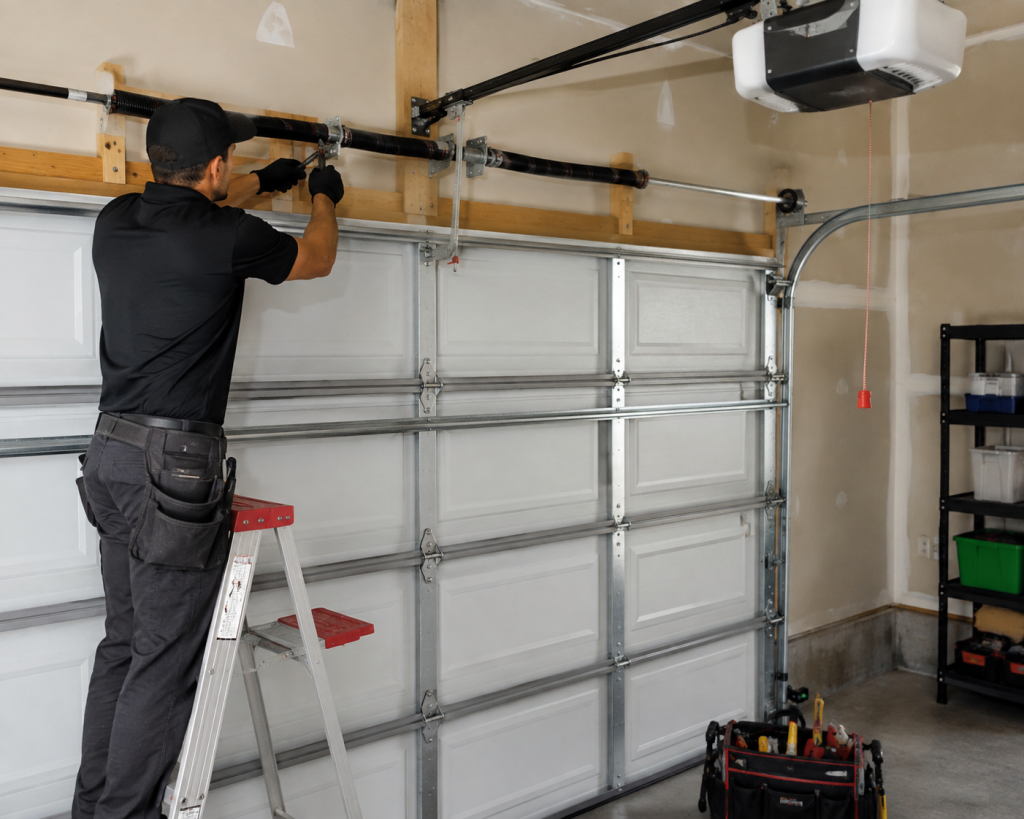
A garage door should get a full professional tune-up once a year, with a homeowner visual check every season (four times a year). Between those, individual parts have their own schedules: rollers and hinges need lubrication every three to six months, cables and springs need a visual inspection every six months, and the opener’s safety sensors should be tested monthly. The exact interval depends on how many cycles the door runs per day and the climate it sits in, but the once-a-year professional visit is the baseline every homeowner should keep to avoid an unnecessary garage door repair down the line.
Key Takeaways
- Once a year, minimum: A full professional inspection and tune-up catches wear before it becomes a breakdown.
- Every season, DIY: A five-minute visual check (listen for noise, watch the door track, test the auto-reverse) between professional visits.
- Lubrication is the cheapest insurance: Rollers, hinges, and tracks every 3 to 6 months prevent most of the noise and wear complaints we see.
- High-use doors need more attention: A door cycling 4+ times a day (multi-car households, home businesses) wears faster than manufacturer schedules assume.
- Springs and cables are inspect-only for homeowners: These are under tension and should never be adjusted or replaced without a professional.
- Skipping maintenance is the #1 reason for premature spring and opener failure in the doors we’re called out to repair.
DIY-Safe Maintenance vs. Call-a-Pro Maintenance
|
Task |
DIY-safe |
Call a pro |
|
Lubricating rollers, hinges, tracks |
✅ Yes, every 3 to 6 months |
|
|
Testing auto-reverse and sensors |
✅ Yes, monthly |
|
|
Tightening visible loose hardware |
✅ Yes, every 6 months |
|
|
Visual cable inspection (looking only) |
✅ Yes, every 6 months |
|
|
Cable replacement or adjustment |
✅ Under spring tension, injury risk |
|
|
Spring replacement or adjustment |
✅ Under high tension, injury risk |
|
|
Chain/belt tension adjustment |
✅ Requires opener disassembly |
|
|
Full annual tune-up |
✅ Recommended once a year minimum |
How Often Should You Service a Garage Door Overall?
Plan on one professional service call per year, plus a homeowner visual check each season.
Manufacturers like LiftMaster and Chamberlain generally recommend annual professional maintenance for a door cycling the average 2 to 4 times a day. If your household runs the door more often (multiple vehicles, a home gym or workshop in the garage, teenagers), it’s usually worth bumping that to twice a year, since skipped maintenance on a high-use door is one of the more common paths to an emergency garage door repair down the line.
How to Build a Garage Door Maintenance Schedule That Actually Gets Followed
The schedule that works is the one tied to something you already do. A few options that hold up in practice:
- Tie the seasonal visual check to daylight saving time changes (spring forward, fall back) since that’s twice a year already
- Book the annual professional garage door tune-up in early fall, before winter cold makes lubricant thicken and hardware contract
- Set a recurring phone reminder for opener sensor testing on the first of each month
Call a pro if: the door has gone more than 18 months without any professional attention, or you’re hearing a new noise and aren’t sure what’s causing it.
How Often Should Garage Door Rollers and Tracks Be Lubricated?
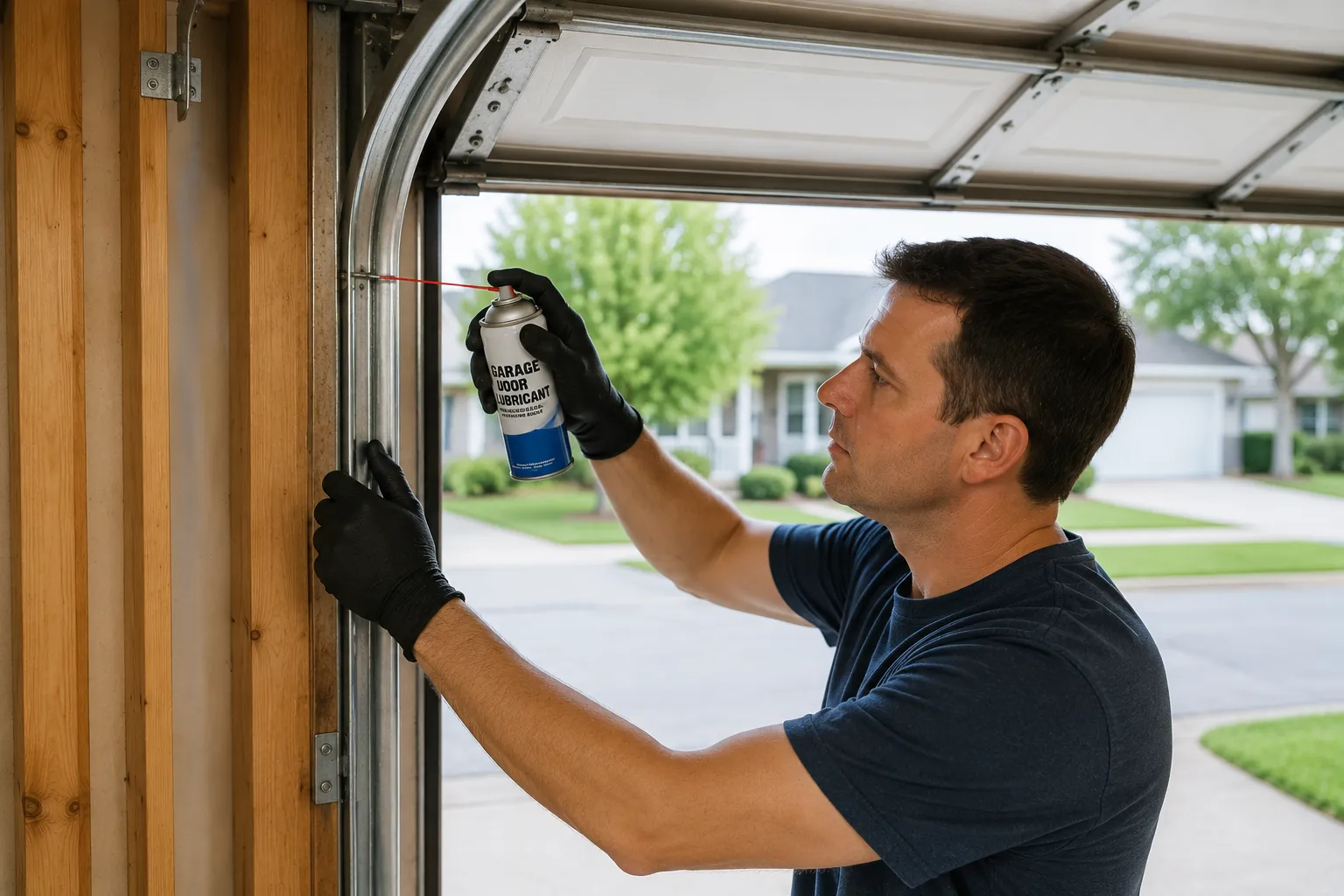
Lubricate rollers, hinges, and tracks every 3 to 6 months, using a silicone-based garage door lubricant, not WD-40 or grease, which attract dust and gum up over time.
Symptom: Grinding or squealing when the door moves.
Most likely cause: Dry rollers or hinge pins.
Fix: Apply a small amount of silicone lubricant to each roller and hinge, then run the door up and down twice to work it in.
We covered the full lubrication process and lifespan expectations for rollers separately, since that’s a big enough topic on its own. See our guide on how often garage door rollers need to be replaced.
How to Lubricate a Garage Door Without Over-Applying
Over-lubricating is almost as common a mistake as skipping it. Wipe off visible dust or grime first, apply lubricant sparingly to moving metal parts only (never to the track surface itself, which should stay dry so the rollers can grip), and wipe away any excess so it doesn’t drip onto the garage floor.
Call a pro if: The noise continues after lubrication, which usually points to worn rollers rather than a lubrication issue.
For a broader seasonal walkthrough of what to check across the whole door, Angi’s guide on how to inspect and maintain your garage door is a solid reference.
How Often Should Garage Door Cables Be Inspected?
Have cables visually inspected every 6 months, and always as part of the annual professional tune-up.
Symptom: The door looks slightly crooked when closing, or you can see fraying on the cable near the bottom bracket.
Most likely cause: Cable wear from normal cycling, or a cable starting to slip off its drum.
Fix: This is inspect-only for homeowners. Cables are under spring tension and can cause serious injury if they let go while someone is adjusting them.
How to Spot Early Cable Wear Before It Becomes a Failure
Look at the cable where it wraps around the bottom bracket and the drum at the top. Fraying, rust, or visible thinning at either point means it’s time to call a technician, even if the door still opens and closes normally. Cables rarely announce themselves with noise the way rollers do; the first sign is often the door sitting unevenly.
Call a pro if: You see any fraying, rust, or unevenness in how the door sits when closed. Do not attempt cable work yourself.
For a closer look at inspection intervals and the exact warning signs to watch for, read How Often Should Garage Door Cables Be Inspected?
How Often Should a Garage Door Opener Be Serviced?
Have the opener’s chain or belt, motor, and safety sensors checked once a year, and test the auto-reverse and sensors yourself once a month.
Symptom: The door reverses unexpectedly, or the garage door opener seems to strain and take longer than it used to.
Most likely cause: Chain/belt tension has drifted, or the motor gears are wearing down.
Fix: A technician tightens the chain or belt to spec and checks motor gear wear during the annual visit. The monthly homeowner check is simpler: place a piece of scrap wood on the ground where the door closes, and confirm the door reverses on contact instead of continuing to close.
For anything specific to programming, syncing, or replacing your opener rather than servicing it, see our guides on what to look for when buying a garage door opener and how to program a garage door opener.
This lines up with LiftMaster’s own maintenance guidance, which recommends monthly safety-reversal testing for all residential openers. DASMA’s safety guidelines for garage door openers outline the same manufacturer-recommended sensor and reversal testing standards.
How to Test Garage Door Opener Safety Sensors Monthly
Wave a broom handle or similar object through the sensor beam near the bottom of the tracks while the door is closing. The door should stop and reverse immediately. If it doesn’t, the sensors may be misaligned, dirty, or wired incorrectly, and the door should not be used until that’s fixed. We go deeper on sensor troubleshooting in our guide on garage door sensor issues.
Call a pro if: The auto-reverse test fails. This is a safety issue, not a convenience one, and shouldn’t wait for the annual visit.
For the complete opener maintenance timeline, check out our dedicated guide, How Often Should a Garage Door Opener Be Serviced?
How Often Should Garage Door Hinges and Hardware Be Tightened?
Check and tighten hinges, brackets, and roller hardware every 6 months.
Symptom: Rattling or a slightly loose feel when the door opens, or visible gaps at hinge points.
Most likely cause: Normal vibration loosening bolts and screws over thousands of open/close cycles.
Fix: Using a socket wrench, snug up any loose bolts on hinges, roller brackets, and the track itself. Don’t overtighten; hardware should be snug, not forced.
How to Check Garage Door Hardware Without Disassembling Anything
You don’t need to remove any parts. Walk the door’s full track with a flashlight while a helper opens and closes it slowly, watching for movement at hinge points or brackets that shouldn’t be flexing. Anything that visibly shifts is due for tightening.
Call a pro if: A hinge is cracked or a bracket is bent rather than just loose. Damaged hardware needs replacement, not tightening.
For the full tightening schedule and what to inspect at each interval, read our detailed guide How Often Should Garage Door Hinges and Hardware Be Tightened?
Keep Your Garage Door on Schedule
A garage door that gets a seasonal look and an annual professional visit rarely surprises you with a breakdown. Most of the emergency calls we get trace back to a spring, cable, or opener that went a year or two past its checkup.
DoorJam Garage offers scheduled maintenance visits that cover every item on this checklist in one appointment. Contact us today or give us a call to book a maintenance visit or same-day inspection, and we’ll build a schedule around how much your specific door actually gets used.